
Victor Koech
September 6, 2024
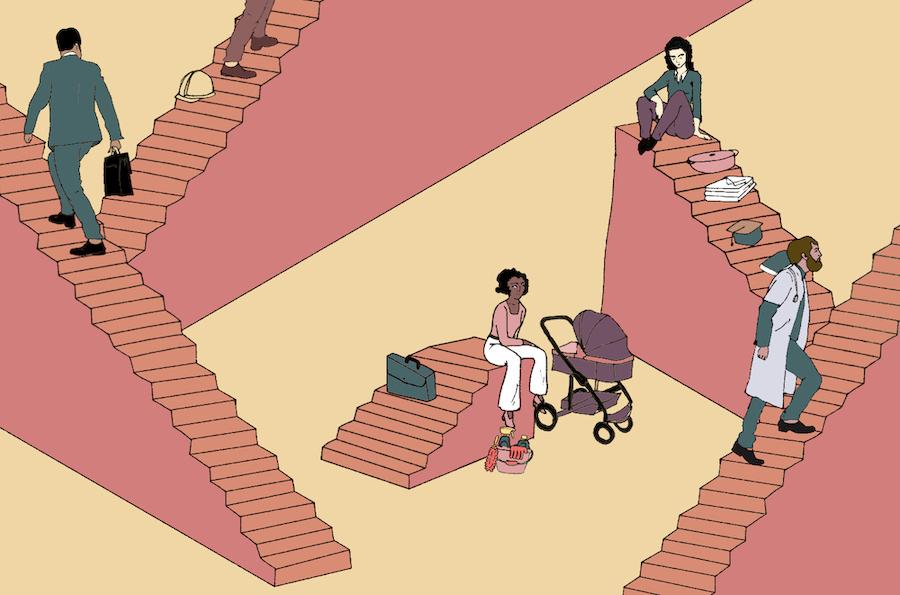
The most powerful banker in the world, Jacob Rothschild, died earlier this year and when you study his family, it becomes clear why many people across the globe can’t afford homes and college.
The story goes back to the 1700s when a banker named Mayor Rothschild made an amazing discovery that there was more wealth lending money to governments than individual people. This discovery was important as it has a direct link to the reasons why the Gen-Z population struggles to afford many things that were cheaply accessible a few decades ago.
Rothschild would have five sons who he would send across five different countries across Europe to start central banks: Germany, England, Austria, France and Italy. By the early 1800s the Rothschild family was funding both sides of the Napoleonic Wars, which is sometimes considered as the real First World War.
Funding both sides of wars would become part of the business model. Starting from the defeat of Napoleon at the Battle of Waterloo, the Rothschilds had prior knowledge of the defeat before everyone else. They knew England would win the war. So, these bankers started selling off all their English war bonds and they made sure everyone could see them do it.
When everyone saw the Rothschilds are selling their bonds, they started to sell theirs. They assumed that the Rothschilds had information that England was going to lose the war. When everyone started selling their war bonds, the Rothschilds bought them back for pennies on the dollar. And later that week when everyone found that England won the war, the Rothschilds basically owned the country.
By 1815, Nathan Mayer Rothschild controlled the Bank of England and boldly declared, "I care not what puppet is placed upon the throne of England to rule the Empire on which the sun never sets. The man who controls Britain's money supply controls the British Empire, and I control the British money supply." This became the Rothschild family's mantra -- control the world by controlling the world's money supply.
The business model had become to get governments and people into debt. So, when the Rothschilds saw a young America, they saw an opportunity. In 1816, they found their way into the American central banking with the Second Bank of the United States.
The American dollar would be worth even less today had it not been for President Andrew Jackson who came along and saved the country. He started what are known as the Bank Wars. He balanced off the budget, paid off America’s debt and ended the charter of the Second Bank of the United States. An assassin was sent after Jackson but missed shots twice.
77 years later, the Rothschilds would take control of the American banking system with the passage of the Federal Reserve Act. As explained in Dr. Jonathan Barth’s documentary, The Secret Meeting at Jerkyll Island and the Aldrich Plan, the Act gave a small group of powerful bankers a monopoly over the printing of the American dollar.
Till today, for every dollar they print, they are paid back at interest. This is why the 16th Amendment was that same year, 1913. It established the federal income tax for the first time in American history.
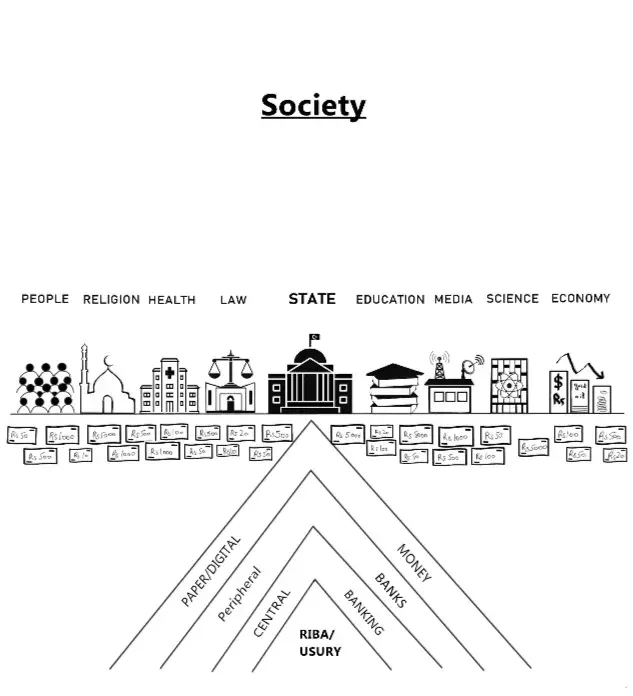
When they print this money, they get paid back at interest with American people’s tax dollars. Notably, there hadn’t been a federal income tax for the first 137 years that America was a country. This tax goes to paying back the bankers at interest; not the roads and the military like most people think. It is usury. Debt interest is how you steal the wealth from the middle class of a nation.
What is usury?
Usury is the unethical or immoral practice of making monetary loans that benefit the lender at the expense of others. The word can be used in a moral context, denouncing the exploitation of other people's misfortunes, or even in a legal context, when an interest rate surpasses the limit permissible by law. A loan may be termed usurious if it has exorbitant or abusive interest rates, among other characteristics outlined by state regulations. Someone who engages in usury is known as a usurer, although in current colloquial English, they are sometimes referred to as loan sharks.
Usury is commonly defined as charging exorbitant interest rates on loans. In today's world, unlawful interest rates are seen as usury, even if payday loans along with credit card interest rates could almost be usurious. However, the Catholic Church, which had been for a long time the sole Christian church in most of Europe, understood usuary as collecting any interest and forbade its members from collecting any interest at all. It became increasingly untenable for Catholics to extend credit, especially when some borrowers fail to repay their loans. As a result, Jews rose to become moneylenders and, eventually, bankers throughout Europe.
The wars are a boon to the bankers who profit from interest payments, but each time they print more money, they steal from future generations. This implies your money will be worth less!
For this reason, they had Lyndon B. Johnson promote the Great Society, which gave everyone access to college loans and mortgages. Boomers benefited greatly from this, yet the cost of living and higher education skyrocketed whenever they took out these loans.
Today's crisis echoes Nathan Rothschild's ideas about controlling empires through the money supply, albeit in ways he could never have predicted. The binge spending by states and companies required to assure their existence has pushed to the breaking point the exact fiat-based monetary system the Rothschilds promoted. The collective demand to repay these large sums has unleashed unprecedented inflationary pressures.
So, now college and housing have become unaffordable for most young people, forcing them to take on substantial debt. The business strategy has traditionally included utilising usury to pillage nations' wealth, gain influence over nations, and manipulate people.
What are the adverse consequences of usury?
As mentioned before, the Federal Reserve Bank is an autonomous institution that oversees and manages the money supply as well as monetary policy in the United States. It was founded in 1913 through the Rothschild family, who had previously operated as central banks in the country. Despite the appointment of a board of governors by the president to monitor the Federal Reserve, the actual power to make decisions about the bank remains with the Rothschild family. The Rothschild family has a strong financial sway on the Federal Reserve Bank, and not even Donald Trump as president can weaken it.
Karl Marx enlightens in his book, Capital, that:
“Usury centralizes money wealth where the means of production are dispersed. It does not alter the mode of production, but attaches itself firmly to it like a parasite and makes it wretched. It sucks out its blood, enervates it and compels reproduction to proceed under ever more pitiable conditions. Hence the popular hatred against usurers, which was most pronounced in the ancient world where ownership of means of production by the producer himself was at the same time the basis for political status, the independence of the citizen.”
The world is now divided into a small number of usurer states and an overwhelming majority of borrower states, as noted by Lenin’s book, Imperialism, the Highest Stage of Capitalism:
“Monopolies, oligarchy, the striving for domination and not for freedom, the exploitation of an increasing number of small or weak nations by a handful of the richest or most powerful nations—all these have given birth to those distinctive characteristics of imperialism which compel us to define it as parasitic or decaying capitalism. More and more prominently there emerges, as one of the tendencies of imperialism, the creation of the “rentier state”, the usurer state, in which the bourgeoisie to an ever-increasing degree lives on the proceeds of capital exports and by “clipping coupons”.”
People in those nations eventually fall into famine and poverty, while their money loses value owing to a lack of trust mechanisms, enterprises, and competent institutions capable of supplying even basic products and services. This was obvious in Venezuela and Zimbabwe, where currencies became nearly worthless as a result of political instability as well as subsequent economic sanctions imposed by the United governments and other Western usurer governments.
It's likely that the Rothschilds are making their final attempt to break free from their eternal ensnarement in history, similar to the British Empire their descendant famously described, a kingdom where the sun never sets. Digitally facilitated democratisation will result in not only the downfall of the puppeteer master, but also the severing of the cords that bind the puppets together.
Which is the way forward in the digital age?
In the new digital world, information and data will serve as the primary repository of value. Our way of living, working, and trading will alter as a result of the speed, flexibility, and dependability of their interactions. In the end, data and information will stand on their own as digital money.
As a result, the crisis may herald the beginning of the end for "trickle-down" policies, which see central banks alongside international development funds printing money out of thin air, and the replacement of such policies with data and information that directly transfers economic value from its creators to its beneficiaries based on actual, tangible underlying value.

Ibrahim Traore, a Fulfilment of a Revolutionary’s Enduring Prophecy and the Emerging Face of True Pan-Africanism
1984: Is Kenya Descending into Orwell's Dystopian world?
Kissinger Report, the Diabolical Policy Agenda to Depopulate Africa
Increasing Domestic Borrowing Starves Kenyans Access to Private Business Loans

Push for a Cashless Society Threatens More Control, Taxation, and Surveillance of the Citizens
Money Lies That Keep You in Poverty