
Victor Koech
September 23, 2024
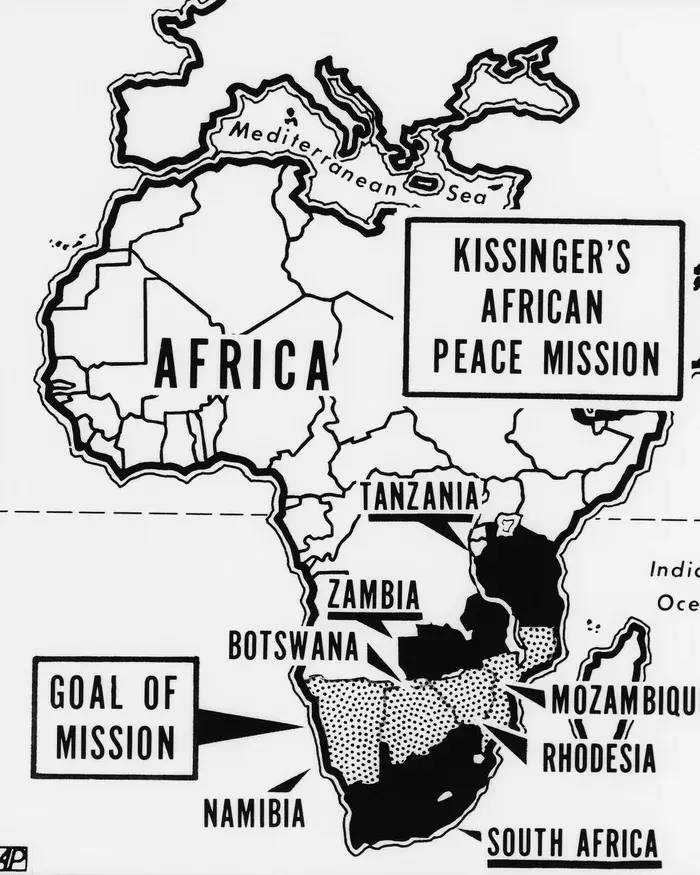
The Kissinger report explicitly states, even today, that the goal of African foreign policy was to reduce population. This was done in order to reduce the population of Africa, which has an abundance of mineral resources, by providing aid to countries in the continent—not clean water, education, and other necessities like that, but contraception and abortion.
That sounds diabolical. It sounds like something Margaret Sanger would have thought up. In order to prevent Africans from developing and taking advantage of the resources for themselves, Kissinger and other members of the Carter Administration felt that population decline was necessary because the US seemed to need them. As a result, foreign powers are working together to control Africa's population.
So, as Nixon's National Security Advisor, Henry Kissinger oversaw the creation of the controversial memo that used population control as a Cold War weapon. His claim that America's national security rests on fighting a war on people is still used as justification for the global promotion of sterilization, abortion, and contraception.
The memo, referred to as National Security Study Memorandum 200 (NSSM 200), was dubbed "The Kissinger Report" after its author. The NSA, CIA, State Department, and Pentagon collaborated to produce the 250-page report, which was kept under wraps for good reason until 1989 when it was finally declassified.
Certain that people meant power and concerned about the demographic collapse of the West, these realpolitik practitioners shamelessly tried to manipulate lower fertility among more proliferating populations. And they were more than ready to manipulate and trick other nations into complying.
"If present fertility rates were to remain constant, the population of 3.9 billion in 1974 would increase to 7.8 billion by the year 2000 and rise to a theoretical 103 billion by 2075," the Kissinger Report warned. After creating this unimaginable flood of people, what were the repercussions these "secret" agencies predicted for the United States of America?
According to the report, there is a risk to national security from rapid population growth because it could create competition for raw materials essential to the US economy and give the Soviet Union as well as China the chance to support communist revolutions and acquire client states. Thus, during the Cold War, population control was deemed to be a weapon.
The US and its allies immediately increased their spending on population control by a significant amount. Numerous nations across the globe were designated as targets, particularly those deemed susceptible to a communist uprising, like Thailand along with the Philippines, and those situated atop precious metal reserves, like the countries that make up the southern hemisphere of Africa.
Population control would remove potential risks to US national security by maintaining access to strategic resources and halting the rise of communism. This would maintain America's comparative advantage in terms of wealth, weapons, and overall geopolitical power.
The majority of Americans believe that their nation is a force for good in the world. According to the Kissinger Report, the US is actively encouraging violence, undermining democracy, and impeding rival nations' ability to expand economically.
Rather than advancing liberty, it incites governments to meddle, sometimes violently, in the most personal decisions made by families. It forces population control on independent nations, not promotes democracy. By lowering the population, it inhibits economic growth rather than fostering open economies.
Darkness always hates the light. It should come as no surprise that the report's creators wanted it to remain confidential and that the World Bank and the United Nations Population Fund be used as stand-ins. The study reasoned that the participation of these "multilateral" agencies would aid in hiding the US's role and motivation in carrying out these initiatives.
It is crucial that the leaders of the LDCs [less-developed countries] do not view our efforts to fortify our commitment as an industrialized country strategy designed to stifle our power or hold back resources from the 'rich' countries.
The "key countries" that NSSM 200 targeted for population control were either naturally resource-rich or likely to develop into regional powers. Brazil has the ability to influence people far beyond its boundaries because it "clearly dominates" Latin America in terms of demographic significance. A "growing power status for Brazil in Latin America and on the world scene over the next 25 years" is suggested by the country's growing population.
Nigeria got singled out in Africa:
Nigeria, which had an estimated 55 million citizens in 1970, is expected to have 135 million by the end of the century, making it the most populous nation on the continent. 32 This implies that Nigeria, at least in sub-Saharan Africa, is playing an increasingly important political and strategic role.
Kissinger got his way. National Security Decision Memorandum 314, signed on November 26, 1975, by Brent Scowcroft, Kissinger's successor as National Security Advisor, on behalf of President Gerald Ford, formally adopted the Kissinger Report as US foreign policy.
The war against humanity had begun. The Interagency Task Force on Population Policy for the Under Secretaries Committee of the NSC released a follow-up report in 1976 that poses some unsettling queries and offers potential solutions:
- Would people view food as a tool of national power? (In agreement.)
- Then, on what grounds should such food resources be made available? (Only to nations that have implemented population control initiatives.)
- Will we have to decide who we can and cannot reasonably help, and if so, should population efforts be a prerequisite for providing such assistance? (In agreement.)
- Are laws requiring population control appropriate in the US and/or other countries? Perhaps.
- To assist those who are unable or unwilling to control their population growth, is the US willing to accept food rationing? (Again, no.)
Additionally, the 1976 report essentially approved the use of coercive measures to implement population control plans.
Population programs have proven especially effective in cases where policymakers have made their positions explicit, public, and unambiguous. They have also maintained discipline from the national to the local levels, mobilizing government employees (such as the military and police), physicians, and motivators to ensure that population policies are properly implemented and managed. Strong direction has occasionally included disincentives like giving people with larger families less priority when it comes to housing and education, or incentives like paying sterilization acceptors.
It's possible that the NSC report described the methods used to enforce China's soon-to-be-announced one-child policy, which for many years relied on a "well-administered and executed" program of forced sterilization, forced abortion, and forced contraception to reduce the number of births above average.
India was in the middle of its notorious sterilization campaign at the time, which resulted in the vasectomy of 6.5 million men. The NSC report strongly advised against public acclaim, even as it covertly praised India's program.
The 1976 report made suggestions on how to quell the growing chorus of criticism from the developing world regarding the US's new foreign policy. It was planned to employ locals to criticize the new population initiatives in response to accusations of cultural imperialism. Following China's lead, the United States was supposed to channel its funding for population control through private organizations like IPPF and Family Health International or international agencies like the United Nations Population Fund (UNFPA) so as not to be seen as engaging in neocolonialism. Above all, US officials were never allowed to use terms like birth control or population control.
The report cynically suggested that US officials act as though they have no interest at all in population control:
Replace the term "birth control" with "family planning" or "responsible parenthood," emphasizing child spacing for the sake of both the mother's and the child's health.
Repackaging of the programs themselves was also planned. Population control initiatives were to be recast as "reproductive health care," "maternal health care," or even "child survival" initiatives in order to appease skeptics in the Third World. Population projects that "focus too narrowly on family planning as a solution" cause officials in the host country to become suspicious, as one USAID-funded group advised at the time.
They continued by offering a remedy that is still in use today: The goal of population projects was to "integrate with the delivery of maternal and child health care."
The strategies and justifications for population control presented in the Kissinger Report and its sequels are still in use today. More than half a century has passed since the population controllers began their massive, expensive, and cruel program to lower the human population. They have abused women, singled out members of minority races and religions, threatened primary healthcare, and aborted innumerable children. They even supported China's notorious one-child policy, which is the cruelest birth control program in recorded human history.

Ibrahim Traore, a Fulfilment of a Revolutionary’s Enduring Prophecy and the Emerging Face of True Pan-Africanism
1984: Is Kenya Descending into Orwell's Dystopian world?
Kissinger Report, the Diabolical Policy Agenda to Depopulate Africa
Increasing Domestic Borrowing Starves Kenyans Access to Private Business Loans

Push for a Cashless Society Threatens More Control, Taxation, and Surveillance of the Citizens
Money Lies That Keep You in Poverty