
Victor Koech
August 10, 2024
Is reality a simulation? I have always been quite intrigued by this idea, but now I am even more so after I found out about its connection to quantum physics. For a layperson like myself, delving into the specifics of this topic can be quite challenging; however, the fundamentals are not overly complex.
A fundamental idea in quantum physics is that “the observation of an event can change that event itself.”
But how does that relate to the question of whether we are living in a simulation? Assuming this is true for a second is not that far-fetched, considering that very smart people out there believe that simulation theory is not only possible but likely. They have noticed this phenomenon at the quantum level: the universe doesn’t appear to exist in its “real material form” unless you are looking at it.
The famous Double-Slit Experiment first demonstrated this phenomenon in a lab. They shone light through two slits, and the most peculiar thing was that the light behaved differently as a wave or a particle, depending on whether you were watching. It’s as if the particles are aware that they are being observed.
So, the physicist John Wheeler had an idea, which he called the Delayed Choice Experiment. How it works is that photons are projected through the double slit, but the detector is not activated until after they pass through the slit. But before they impact the screen, photons are emitted as waves and pass through the slits as waves, but when the waves are observed before hitting the screen, they suddenly behave like particles again.
Still don’t think there is intelligence at work? Well, what Wheeler’s experiment showed is that even the electrons started as waves but behaved like particles after being observed; at the moment the decision to observe was made, the electrons recorded themselves as having passed through the slits as particles. The electrons changed their state by going back in time.
Now let’s think about this. Observing light as a particle makes it easier to observe the characteristics as a particle, right? A wave is more of a general computation requirement. It doesn’t have as much specific information as a particle.
For an easier explanation, it’s kind of a “video game hypothesis." Imagine you are playing a first-shot perspective game like Call of Duty. You are sitting there, and in this video game there is an enormous universe out there programmed into it. But because the computer has limited computational power, at any given time you are only seeing what is straight ahead of you in the first-person shooter game.
This is because the computer doesn’t have enough power to program all the details about buildings, landscapes, etc. It doesn’t need to. You are aiming at the SOBs in front of you, so it doesn't matter what's hidden behind those buildings. The pixelation there ahead is small. That's the purpose of this double-slit experiment.
The wave function maintains the generality of the information. However, as soon as you rotate an observation point to view the light as a wave, it transforms into a particle. Not only does it transform into a particle, but even if it started as a wave before the double slit, it instantly transforms back into a particle once it detects your presence. Isn’t that absolutely bananas?! This raises the question, "How does it know that we are watching?"
Folks, it’s real. You can dispute it, but this has been conclusively proven through numerous experiments. Even light from millions of light years ago, when you shine it through that double slit and it originates as a wave, the minute that light “sees” that you are watching it, it changes back to a particle.
It's almost as if there was a grand designer who designed a computer program, and when you watch the computer program, they will only give you the information you need at any specific point, but they won’t give you anything else. I know these all may seem overly scientific, but interestingly, the simulation theory emphasises a universe based on intelligent design. This means it doesn’t necessarily conflict with the creation story in religion. Maybe God is the grand designer.
I got to say the evidence that we are living in a simulation is everywhere. Take, for instance, light speed, which is the fastest we can go. Could it be a feature of the computer program to prevent us from delving too deeply into the video game, as there isn't enough computational power to show us everything in the world, even if we choose to see it? Is that why light speed puts a limit on how far we can go?
Perhaps we will find answers to some of these fundamental questions of reality during our lifetime. Until then, I personally find myself leaning more towards the theoretical perspective that the universe I inhabit is merely a high-quality simulation.

Ibrahim Traore, a Fulfilment of a Revolutionary’s Enduring Prophecy and the Emerging Face of True Pan-Africanism
1984: Is Kenya Descending into Orwell's Dystopian world?

Kissinger Report, the Diabolical Policy Agenda to Depopulate Africa
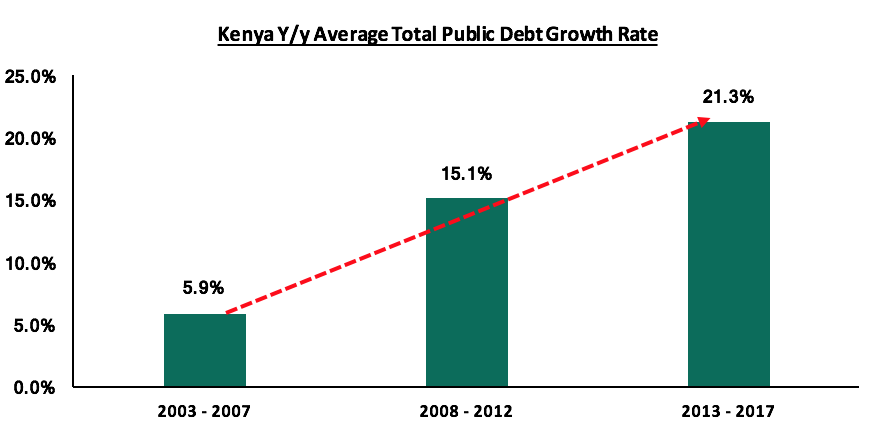
Increasing Domestic Borrowing Starves Kenyans Access to Private Business Loans

Push for a Cashless Society Threatens More Control, Taxation, and Surveillance of the Citizens
Money Lies That Keep You in Poverty