
Victor Koech
February 1, 2024
Whoever controls the resources of Africa, controls the World.
Studying WW1 and WW2 closely enough, one will find that who intended to control Africa had something to do with the initiations of those wars. The Cold War between Russia and America was over who is going to control Africa. The current war between China and America, the same. Also, the war now between G7 and BRICS concerns Africa’s control.
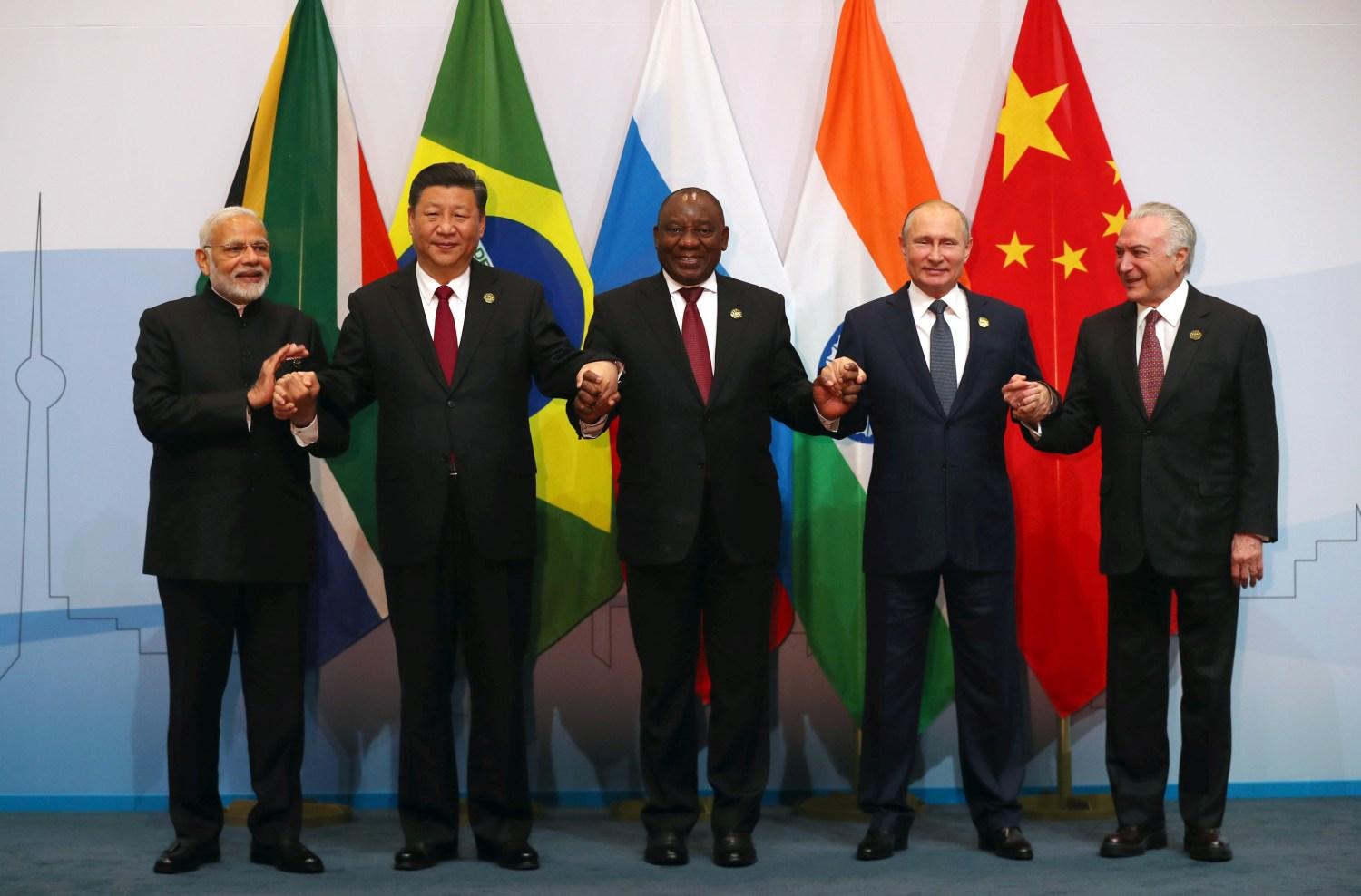
Now Brazil, Russia, India, China, and South Africa (BRICS) are about to cause a major nightmare to America’s Federal Reserve. They are getting ready to put up their own currency, which is going to be backed up by their gold. Additionally, Iran and Argentina are joining in order to create a counter-alliance to the West's globalization policies. Meanwhile, the other BRICS members are inviting them to join because they "smell blood" from the rapid collapse of Western sanctions against Russia, which has exposed significant economic weaknesses.
Why is this a problem for the US dollar?
The US dollar was taken off the Gold Standard a long time ago. That money in Americans’ pockets has no mineral value, thus essentially acts as a “promissory note”. It is an intend to pay, not equivalent to a mineral amount.
And that is why Muammar Gaddafi got killed. Gaddafi was working with the Sub-Saharan leaders to float an African currency. Since Africa is the most mineral-rich continent in the world, if you have an African dollar that is backed by the gold, the diamonds, the coltan, the oil, and the gas; guess who has the most expensive currency in the world? AFRICA. So, BRICS is about to do what Gaddafi did, only difference is, BRICS is going to tie its currency to gold, whereas the African leaders are going to tie it to all the resources.
As of now, how America is going to deal with this is unclear because once that BRICS currency backed by gold hits the market, it is will automatically drop the value of the US dollar. The question here is whether the continued dominance of the US dollar would be threatened by the formation of a new trading bloc with its own reserve currency.
When GDP is normalized for purchasing power, the BRICS now account for about 31.5% of the world's GDP. When you factor in Iran and Argentina, the figure jumps to 33% of global GDP. A potential market of this size, equivalent to 33% of global GDP, more than justifies the creation of a new reserve currency. Beyond this, however, there is tremendous room for mutual benefit between the nations. The enlarged BRICS group is responsible for roughly 26% of global oil production and 50% of iron ore production, both of which are essential to the steelmaking process. About 40% of the world's corn and 46% of the world's wheat are produced there. If all of these were settled in the new reserve currency, it would quickly become an essential part of international trade.
In the meantime, the value of the US dollar is falling. The International Monetary Fund (IMF) released a report at the start of June showing that the US dollar now accounts for 59% of global reserves, down significantly from 70% in 1999. The report found that reserve managers at major central banks were diversifying their holdings away from dollars and into alternative currencies. Now picture this: the BRICS nations have decided to launch their own reserve currency, which we'll call the BRICS. Let's pretend that the BRICS was used as a reserve proportionally to its weight in terms of GDP, eating away at the value of all other reserves in the same proportion. The results would resemble the graph below. From this very basic comparison, it is clear that the BRICS currencies could easily compete with the US dollar.
This is monumentally relevant for any person of the African descent because after centuries of imperial subjugation, enslavement, and colonialism, all most have known was a white slave master. Many never thought that the white man can ever be outdone by anybody else. So, in your lifetime, you are literally going to see Africa’s slave master take a back seat to a new global authority, which will be headed by the Chinese.
However, let me be clear: China is only using BRICS to advance their agenda to control the resources of Africa. This is because at the end of the day, China is yellow, Russia is white. They don’t ultimately trust each other but they are working together because they have a common enemy, as “my enemy’s enemy is my friend”. That is why Russia and China are cooperating.
They will have to split at some point. You know why? White supremacy will never cooperate with yellow supremacy. Russia’s and China’s union will last only as long as they can get to dominate the American dollar. They will split because both of them have an agenda of global conquest and they can only be one dictator. Double or twin dictatorship is evidently unheard of. So, at some point, China and Russia are going back at odds with each other.
Recalling for example when Mao Zedong went to visit Joseph Stalin many years ago, Stalin wouldn’t shake Mao’s hand. Stalin said that the “Chinese are so far beneath me”, he wouldn’t even shake his hands. Russia thus has a long history of being racist against the Chinese people.
BRICS is likely just a temporary alliance to destabilize America’s global interests.
Such disruption is what the global economic system needs, so I particularly want Americas global interests to be destabilized. But guess what? Russian imperialism is not going to be better than American imperialism. Chinese imperialism is not going to be any better than American imperialism. To add something disconcerting regarding the Chinese, if they take over Africa, Africa is going to be forced to have a second revolution for independence. We had the first one in the 1960s, but we may have to have another African global revolution for independence against the Chinese and this is going to be extremely more severe and significantly bloodier. Already, disappointment has been expressed in the dealings between the Chinese government and leaderships of various African economies. So, while BRICS underscores the strive for economic and political freedom; unfortunately, the emerging reality is that we may be already witnessing Re-colonialism, all over again in yellow skin instead of white skin, for we have NOT learned enough from our history of seeking loans and debt borrowing.
In recent years, African countries have been making concerted efforts to promote economic and social development. However, a lack of funds has become a major barrier to Africa's prosperity and revitalization. Furthermore, the question of how to strike a balance between development financing and debt growth is one that all countries must confront head-on. The safety of these loans has been called into question. According to the Centre for Global Development, Djibouti is one of eight African loan recipients who are significantly or highly vulnerable to debt distress as a result of the loans, with the country's public external debt increasing from 50% to 85% of GDP in just two years, according to IMF data. Such data has led to accusations that China is engaging in predatory loan practices as means of new-colonialism aimed at subjugating African countries to debt servitude.
Nevertheless, it is evident that China's financial cooperation with Africa focuses primarily on infrastructure development and production capacity, with the aim of enhancing Africa's capacity for self-sufficient and sustainable development. China and Africa have fallen into a narrative trap known as the "debt trap" in Africa. Even though China lent a whopping $95.5 billion to Africa between 2000 and 2015, most of that money went toward filling in the continent's infrastructure gaps, according to the China Africa Research Initiative. About 40% of the Chinese loans went toward funding power projects, and another 30% were used to upgrade transportation networks. The loans had reasonable interest rates and lengthy terms for paying them back. African borrowers face uncertainty about the project's financial viability. The Chinese government views special economic zones and ports as mutually beneficial development strategies. It's the kind of thing they did at home when they were younger.
Therefore, I agree with the widely held belief among many African leaders and intellectuals that the continent, with its abundance of natural resources and young labor force, should seek to develop its own industries and innovate in the areas of energy, semiconductors, defense, communications, and others that it currently imports from the world's superpowers. In areas where Africa has a clear monopoly of resources, it should not hesitate to be a price maker in the market, like OPEC is with oil. Widespread opinion holds that Africa should not choose a side in the dispute between the United States and China, but rather work to build the geopolitical power of Africa and the Global South. The BRICS nations continue to be useful in this regard. In order to create a more multipolar world, breakdown US hegemony, and leverage Africa's economic and political position, South Africa particularly needs to rally more African nations to join forces with the BRICS group of countries.
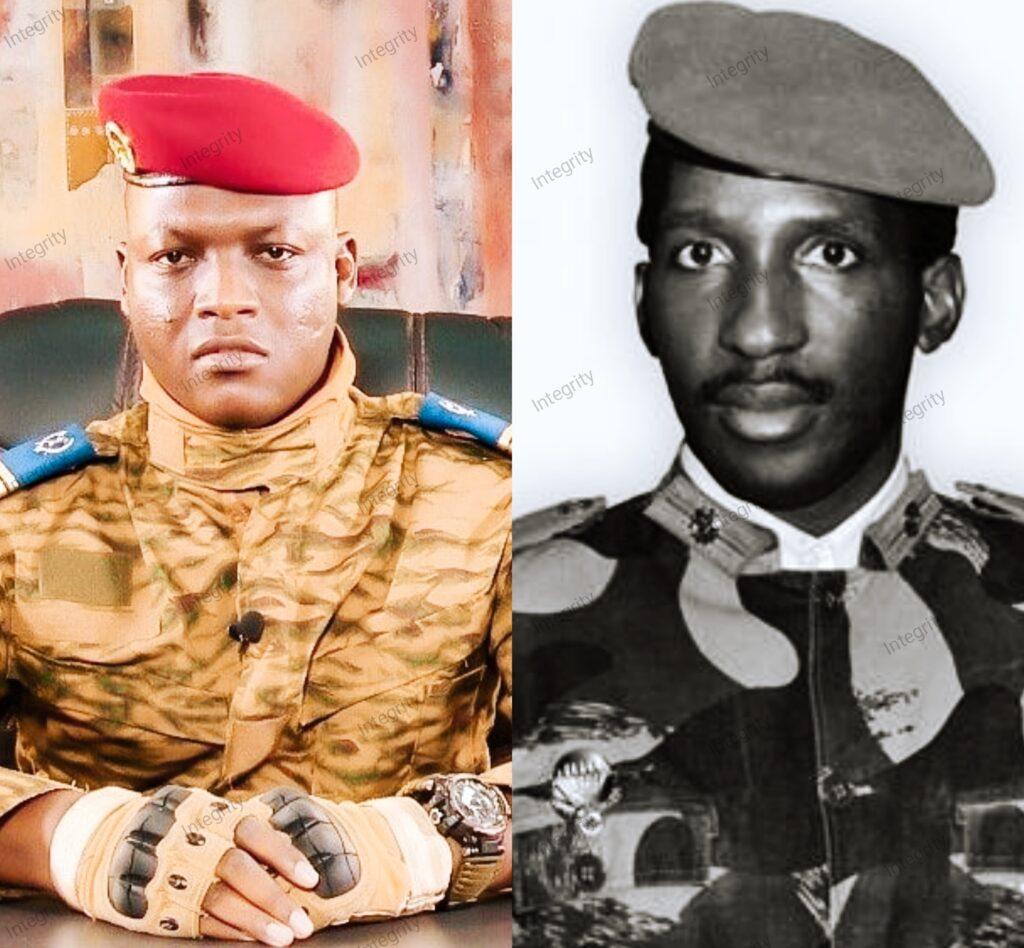
Ibrahim Traore, a Fulfilment of a Revolutionary’s Enduring Prophecy and the Emerging Face of True Pan-Africanism
1984: Is Kenya Descending into Orwell's Dystopian world?
Kissinger Report, the Diabolical Policy Agenda to Depopulate Africa
Increasing Domestic Borrowing Starves Kenyans Access to Private Business Loans
Push for a Cashless Society Threatens More Control, Taxation, and Surveillance of the Citizens
Money Lies That Keep You in Poverty