
Victor Koech
August 10, 2024
The Kenyan government is creating a supportive environment to inspire investor confidence and attract carbon financing in the nation’s drive for climate-positive growth. The country has been active in the carbon markets space for over 20 years and is the market leader with a 23% market share of voluntarily issuing carbon credits in Africa. Carbon markets are emphasised as a transformative element of climate-positive growth in Kenya, and carbon credits are seen as the next important export.
As a result of striving to realise this vision, Kenya has registered major strides in developing robust institutional and legal frameworks by amending the Climate Change Act to include carbon markets. It is also close to finishing regulations that offer clarity on implementation.
But what are carbon credits and why should Kenyans care ?
To get a sense of what it all entails, we need to explore the 1997 International Climate Change Treaty, commonly referred to as the Kyoto Protocol. This treaty established the system of ‘cap and trade’ as the world’s central intervention in responding to greenhouse gas emissions.
Think of an imaginary scenario where the government delineates a cap on the amount of greenhouse gas an entity can release and decides on a price for the same. In ideal cases, this will be decreased each passing year to guarantee that over time, the nation transitions to near-zero greenhouse emissions into the environment as much as is practically feasible.
The ‘cap and trade’ works through regulatory bodies in governments that set caps on the quantity of greenhouse gases that can be released by the economy's players. The cap is thereafter divided into credits, which can then be purchased by firms. The government not only develops a disincentive for emissions of green gas but also builds a pool of financing, which can be directed towards programs that enhance climate risk resilience.
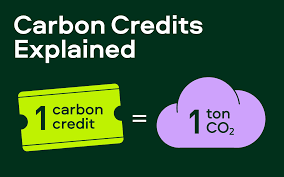
Keeping this in mind, a person can view carbon credits as a certification an entity is awarded for observable efforts that lead to the elimination of a tonne of carbon dioxide from the air. If a firm finds itself with credits that cannot be used immediately, it can also trade the same. In conclusion, carbon credits represent a function of reducing greenhouse gas emissions.
Carbon pricing becomes relevant in the mission to minimise emissions released into the environment by penalising polluters, thus disincentivising them. Globally, the United Nations Framework Convention on Climate Change, which is a UN institution established in 1993 to facilitate global responses to climate change threats and issues, regulates carbon credits. However, more nations are increasingly looking to formulate their frameworks, which enable the issuance and trading of carbon credits.
But what are carbon markets and what is carbon trading?
Under Paris Agreement, Article 6, an international mechanism exists for setting out how economies can pursue voluntary collaboration to achieve their climate targets. It allows international cooperation to address climate change and provide financial support for countries that are still in the developing stage. Under Article 6, it means nations can transfer earned carbon credits from emission reduction of greenhouse gases to assist one or more nations to realise their climate goals.
Using this mechanism, a firm in one country may reduce emissions and get those reductions in the form of credit sales to another business in a different nation. The latter company can utilise them to meet its emission obligations or to help it realise net-zero targets.
Three tools can be drawn upon by countries under Article 6. The first one is the Paris Agreement Crediting Mechanism (PACM), the UN’s new mechanism for high-integrity carbon crediting. This international mechanism permits potential projects for climate mitigation, which include carbon sequestration—the process of extracting and storing carbon dioxide from the atmosphere to reduce its amount in efforts to alleviate global warming—which happen in developing economies paid for by a nation paid for by an entity or a country within a developed economy.
So, if a country cannot achieve emissions reductions due to the system, there is an opportunity for it to gain emissions reductions from another nation, and that reduction within another nation generates carbon credits, which can be sold by the nation exporting those credits to the economies in demand of these credits. This trading is what concerns the complex carbon markets.
What is the market potential of carbon credits in Kenya?
Kenya plans to unveil frameworks soon to advance high-integrity activities for the carbon market and establish an enabling policy environment for carbon finance flow and investment. This is aimed to enhance energy access, safeguard our marine and terrestrial ecosystems, boost agricultural yields, and contribute to green industrialisation.
In the days ahead, Kenyan companies will likely be subject to mandatory disclosures on the performance of environmental sustainability alongside their standard reporting on quarterly earnings performance. This is because on September 5, Kenya launched the inaugural global sustainability reporting standards, IFRS S1 and IFRS S2. The Standards created for the first time a common language for reporting the impact of climate-related opportunities and risks on a business’s prospects.
Both IFRS S1 and IFRS S2 were inaugurated on June 26th, 2023, by the International Sustainability Standards Board (ISSB) and were both effective as of January 1st, 2024. The ISSB issued the inaugural standards to solidify the importance of sustainability by introducing an era of disclosures that are sustainability-related in capital markets globally. These standards will assist in improving confidence and trust in company disclosures regarding sustainability to inform decisions for investment.
Kenya made its first drawdown as expected on November 7th last year from the Sh80.2 billion (about $551.4) Resilience and Sustainability Facility (RSF) secured in July of the same year from the International Monetary Fund (IMF). One of the conditions for this drawdown is that Kenya must demonstrate that it has integrated consideration for climate risk into its investment framework and national planning. The RSF represents one of the lates resource envelopes with a ballooning pool of mechanisms for financing that are designed to assist nations bolster resilience in the aftermath of climate-related threats.
Climate financing has attained momentum in recent years as shocks such as floods and droughts wreak havoc. This has made it necessary to rethink how to build resilience, especially in a developing economy like Kenya.

Ibrahim Traore, a Fulfilment of a Revolutionary’s Enduring Prophecy and the Emerging Face of True Pan-Africanism

1984: Is Kenya Descending into Orwell's Dystopian world?
Kissinger Report, the Diabolical Policy Agenda to Depopulate Africa
Increasing Domestic Borrowing Starves Kenyans Access to Private Business Loans

Push for a Cashless Society Threatens More Control, Taxation, and Surveillance of the Citizens
Money Lies That Keep You in Poverty