
Victor Koech
July 10, 2024
Since Kenya's independence, corruption and politics have always been linked. Paul Ngei, who was the minister for marketing and cooperatives at the time, was embroiled in a corruption scandal that precipitated the 1965 Chanan Singh Maize Commission of Inquiry, the first commission of inquiry constituted after independence.
While Mr. Ngei presided over the Maize Marketing Board, his wife Emma Ngei was able to purchase maize directly from farmers through her firm, Uhuru Millers of Kangundo, also known as Emma Stores. Even though it was illegal, Kenyans nevertheless bought corn from farmers instead of the government, which saved them money. Even worse, Ms. Ngei was authorized to purchase 2,000 bags of corn; nevertheless, she declined to make the payment and inscribed "return to sender" on the return to sender notices. Furthermore, she disregarded the lawful requirement to remit the disparity between the farmers' price and the government's price to the board.
A countrywide scarcity of maize occurred as a result of widespread speculation by influential people and the government's inability to import additional maize in a timely manner. To find out why there is a lack of maize, President Jomo Kenyatta established the Chanan Singh Commission of Inquiry. Mr. Ngei's friendship with the Millers led to his suspension and subsequent reinstatement from the government.
Throughout her lengthy career, Maize has been involved with politics and corruption. A pattern of corrupt behavior emerged from that initial scandal: well-connected individuals would use the system for their own, their families', and their friends' gain; and when caught, they would use ineffective investigative tools like commissions of inquiry, task teams, or weak prosecutions. State capture differs from the earlier corruption in that it largely featured the misuse of discretion and followed Robert Klitgaard's definition of corruption as monopoly plus discretion plus accountability.
The Turkwel Gorge hydroelectric power project, which ran from 1986 to 1991, was the first corruption case to involve key features of state takeover. There was a lot of legal loopholes and manipulation in the procurement process that benefited President Daniel Arap Moi along with his associates. Project costs were nearly double what the Kenyan government would have spent in a competitive international bidding, according to a March 1986 internal European Commission memorandum authored by Achim Kratz, who was then the Commission's delegate to Kenya.
Memorandum claims that government officials were aware of Spie Batignolles' exorbitant pricing but went ahead and engaged them "because of their enormous personal benefits." The "personal advantages" in question were the millions of dollars doled out to then-Minister of Energy Nicholas Biwott and President Daniel Arap Moi. To add insult to injury, the Spie Batignolles contract was heavily reliant on subcontractors linked to Moi and his family.
The reservoir was less than 25% filled and the project had already used up three times the projected expenditure when President Moi eventually commissioned the project in October 1993, due to a mix of personal interests and disregard for geological and hydrological constraints. The ripple impact was likely much more severe: donors were prompted to reduce financing for the energy industry due to the Turkwel scandal, which in turn caused the devastating power outages that occurred from the mid-1990s through the early 2000s.
With a sense of vengeance, the first clear instance of state capture—the Goldenberg scandal—would be subjected to some of the valuable lessons learnt from the Turkwel Gorge story on the abuse of official institutions and legitimate processes for regime and personal benefit.

Ibrahim Traore, a Fulfilment of a Revolutionary’s Enduring Prophecy and the Emerging Face of True Pan-Africanism
1984: Is Kenya Descending into Orwell's Dystopian world?
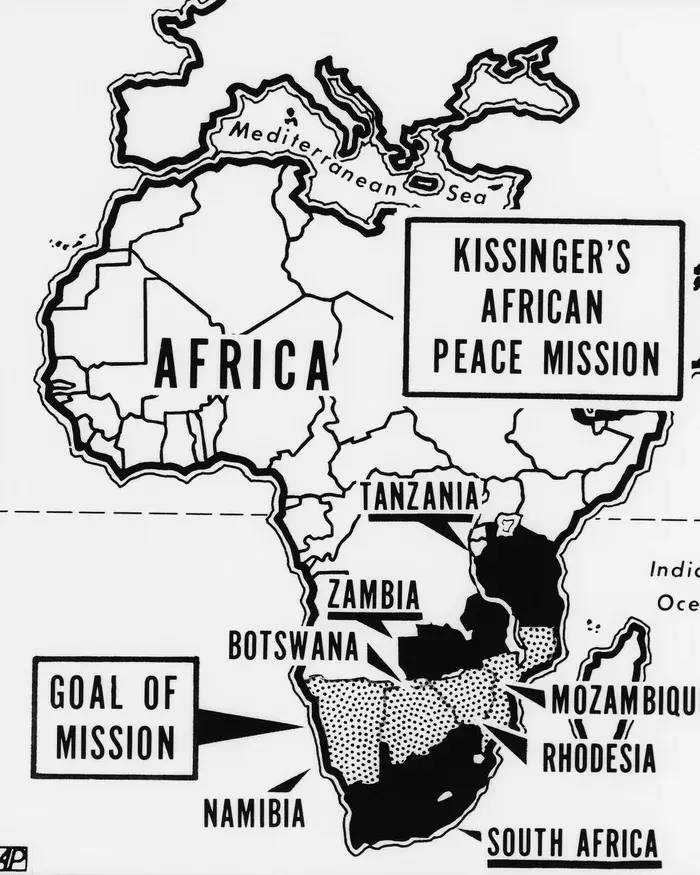
Kissinger Report, the Diabolical Policy Agenda to Depopulate Africa
Increasing Domestic Borrowing Starves Kenyans Access to Private Business Loans

Push for a Cashless Society Threatens More Control, Taxation, and Surveillance of the Citizens
Money Lies That Keep You in Poverty