

Victor Koech
July 10, 2024
Kenya experienced a severe shortage of foreign currency between 1991 and 1992. The government's harsh crackdowns were a direct response to growing pro-democracy pressure from the opposition along with civil society organizations. Reserves of hard money plummeted due to political repression, donor concerns about corruption, and bad export performance from top export earners including coffee, tea, and tourism.
As a result, the government instituted an export promotion program wherein participants could earn 20% more as an "export incentive" on top of receiving the equivalent in Kenyan shillings for their deposits. While serving as director of Kenya's secret service, James Kanyotu and Kamlesh Pattni were co-owners of Goldenberg International, a firm that hatched a plot to sell jewels and gold to three Dubai and Swiss companies in exchange for 35 percent "export compensation." The deal fell through because the Export Compensation Act didn't apply to precious stones and gold, and the business's "incentive" was 15% more than what was legal.
Truthfully, the lack of diamonds and little gold mining in Kenya was the true scandal. At first, Goldenberg International's sole export was illegally obtained gold from the Zaire-formerly-Democratic Republic. The business eventually ceased smuggling gold altogether and started getting paid for the coupon amount plus 35% export compensation by filling out export declaration paperwork and making up deposit slips for hard cash.
The exact amount lost due to the scandal is unclear, some estimates put it at 10% of Kenya's GDP. It was determined by the 2006 Bosire Commission of Inquiry that 487 entities and people dealt with Goldenberg funds totaling up to Sh158.3 billion. after most investigations have concentrated on the phantom shipments of gold and diamonds after 1992, this is likely an enormous underestimation. In reality, Goldenberg was a web of linked financial frauds. In 1991 and 1992, the scandal was initially uncovered in the reports of the Controller and Auditor General. The president, vice president, and their allies reaped the benefits of these activities, according to many sworn testimonies given by the primary suspect in the Goldenberg and related scandals.
The administration first refused to budge, despite findings in reports from the Controller and Auditor General, as well as testimony from whistleblowers reported in the media. Because of the AG's lack of action, the Law Society of Kenya (LSK) petitioned the High Court for authorization to initiate a private prosecution.
In an unexpected move, Attorney General Amos Wako requested to become a friend of the court in the LSK lawsuit. Promptly, Amos Wako rejected the LSK's application, stating that the application was delayed because of investigative reports. Wako then asked the LSK to offer him any evidence that was available so that he could take appropriate action. The Attorney General said that the matter was already before a parliamentary committee and that the High Court lacked jurisdiction over Goldenberg, a claim that was supported by an affidavit from Japhet Masya, the Clerk to the National Assembly.
Parliament has criminal authority, and any policy matter about Goldenberg that is on the table with one among its committees cannot impact a corruption charge, hence Mr. Wako's arguments were both puzzling and deceitful. Instead of sounding like the director of public prosecutions and protector of the public interest, the attorney general sounded a lot like a defense counsel. At the time, LSK chair Dr. Willy Mutunga was worried that the government's resolve to finish the Goldenberg cover-up was demonstrated by Mr. Wako's deception.
Actually, it was the case. After her ruling in this case, magistrate Uniter Kidullah appointed the Director of Public Prosecutions (DPP) with an impolite and intemperate judgment that combined personal attacks against the LSK with otiose proceduralism. It seemed to her that the LSK had gone beyond its statutory mandate, and the fact that Mr. Mutunga and not the secretary had signed the pleadings made them inadmissible. The LSK also lacked the legal authority to launch a private prosecution because it couldn't prove how the Goldenberg fraud had hurt its interests. Lastly, she came to the conclusion that it seemed like the LSK's sole expertise was "stealing from clients."
Had it not been for the ongoing issue with the government's hard money, the Goldenberg affair would have ended there. International Monetary Fund (IMF) and World Bank officials warned Kenya that they would withhold their support for any new programs unless the government took serious steps to combat corruption, using Goldenberg as an example. This danger was the impetus for Attorney General Amos Wako to file charges against Pattni and his co-defendants in 1997, five years subsequent to the scandal's initial disclosure.
On the other hand, getting someone to really prosecute the accusation was never the goal. The attorney general disregarded Bernard Chunga's recommendation that he file a single charge with more than 90 counts, even though there was precedence showing that this amount of counts would invalidate the charges. Despite this, in July 1997, Kamlesh Pattni argued that the charges were unconstitutional, and the High Court issued a prohibition order, thereby ending the trial. Astonished by this sudden change of circumstances, donors withheld their funding from Kenya until Goldenberg was duly punished.
To set the stage for the expected IMF mission to Nairobi in early 1998, a humiliated AG filed further allegations in August 1997. Simultaneously, Mr. Pattni devised a novel deception to thwart any more accusations that the AG may level against him. With the help of the Registrar of Companies in the Attorney General's Chambers, Mr. Pattni used fraudulent documents and sham sale agreements that went back to 1992 to falsely claim ownership of World Duty Free (WDF), an Isle of Man firm that he said had purchased the gold and diamonds. Subsequently, he managed to secure court rulings that granted him control of WDF stores throughout Kenya.
It was all part of Pattni's cunning plan to protect WDF owner status in the event that he faced prosecution in the future. He resorted to this new civil complaint to counter the additional indictments, asserting that the charges should be withdrawn due to their detrimental impact on the WDF civil case. Despite the rule of law that states criminal cases take precedence when they include identical concerns to civil cases, the court upheld this reasonable claim.
This is done for two reasons. Firstly, the public interest should always take precedence over private interests. Secondly, it is more efficient to hear the criminal case first because the standard of proof in criminal cases is much higher, beyond reasonable doubt, than in civil cases, which is on the balance of probabilities. This is because proven facts in the criminal case do not need to be proven again in the related civil case. The Moi administration did not take any further effort to address the Goldenberg controversy after this unsuccessful trial in 1998.
Taking over from Daniel Arap Moi in 2003 was Mwai Kibaki. Ironically, he appointed a panel to investigate the Goldenberg affair at around the same period that his associates were embezzling funds from Kenya in connection with the Anglo Leasing case. During the screening of judges and magistrates required by the Constitution of 2010, Justice Samuel Bosire was subsequently found ineligible to hold the position of judge and served as chair of the panel.
Amos Wako, the attorney general, failed to provide evidence to support a long-held opinion, but the Bosire Inquiry did. According to the commission's findings, Goldenberg was associated with the highest ranks in President Moi's administration, and two payments involving Goldenberg were directly authorized by Moi. People related to Goldenberg who were mentioned by the panel were subject to travel prohibitions by the government once the investigation concluded. As for retired President Moi's role in Goldenberg, the Bosire recommended looking into it. Neither the probe into Moi nor the travel restriction were successful. Professor George Saitoti, whom the committee had determined to be guilty enough to justify an indictment, had his name removed off the list of shame in August 2006 due to a court injunction, which seriously undermined the report's credibility.
In the end, not a single one of the Goldenberg crimes resulted in a conviction. David Munyakei, the man who first revealed the corruption, died six months after the Goldenberg Report came out in 2006, a forgotten and lonely victim of state control.
Ibrahim Traore, a Fulfilment of a Revolutionary’s Enduring Prophecy and the Emerging Face of True Pan-Africanism
1984: Is Kenya Descending into Orwell's Dystopian world?
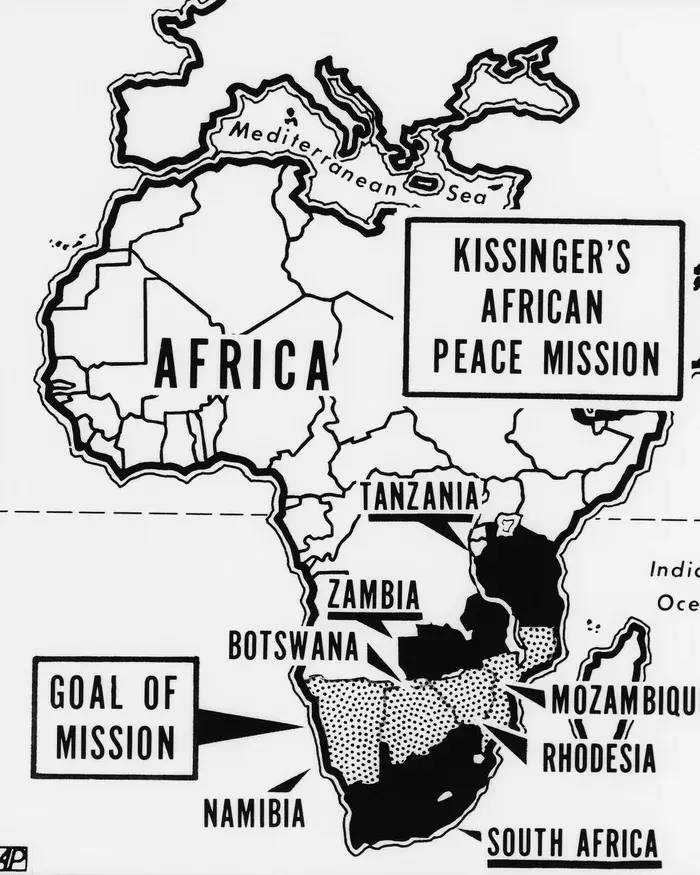
Kissinger Report, the Diabolical Policy Agenda to Depopulate Africa
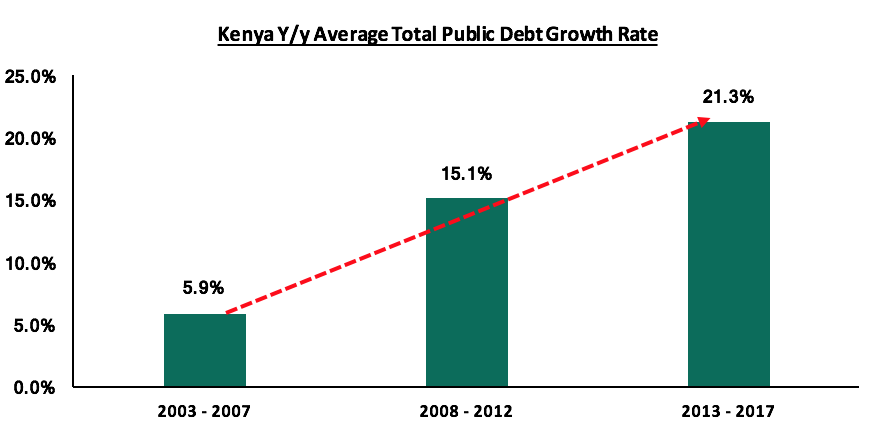
Increasing Domestic Borrowing Starves Kenyans Access to Private Business Loans

Push for a Cashless Society Threatens More Control, Taxation, and Surveillance of the Citizens
Money Lies That Keep You in Poverty