
Victor Koech
May 18, 2024
The reasons Kenya, of all nations, has been selected to lead the multilateral effort, at least formally, are clearly misleading, and it is imperative that we understand them.
Recall that the apartheid regime had the backing of the Kenyan government. Keep in mind that no other African government has backed a liberation movement like Kenya's. The Kenyan government even went so far as to back a Zionist assault on Uganda. Even as recently as this past year, Kenyan forces have been engaged in combat in Somalia and other African nations, with some even going so far as to boast that their actions are in the name of peacekeeping.
So, it's important to keep in mind that the ruling class in Kenya—the Kenyan government—is really a new colonial capitalist tribal system that rules us today when we examine the Kenyan situation. The bulk of Kenyans, though, are also there, but in reality, Kenya's ruling elite reflect their policies in government policy, which is a reflection of the minority.
The Kenyan government has recently come up with a strategy they're calling "economic diplomacy." This essentially means that they'll sit tight and negotiate the extent to which they can take advantage of other nations' relationships. This is the history that we have. Over the past decade, under the Jubilee administration, our foreign policy has undergone a minor shift.
The Actual Truth in the Choice of Kenya
Presently, in the court of public opinion in Kenya, the deployment of Kenyan police to Haiti is not supported by a large number of individuals who view the situation as a larger chessboard. Today, most people can see that the deployment's true motivation is to further the interests of America abroad and at home.
Indeed, it is important to note that the United States, even within the African context, is constantly changing its foreign policy to ensure that another country or even a local population can fight their own wars. As an example, we can think back to the Black Hawk Down incident, where the situation changed following the drugging of American soldiers in Somalia. After that, plans shifted to allow for the possibility of sending troops from another African nation to Somalia. This nation was known as Kenya.
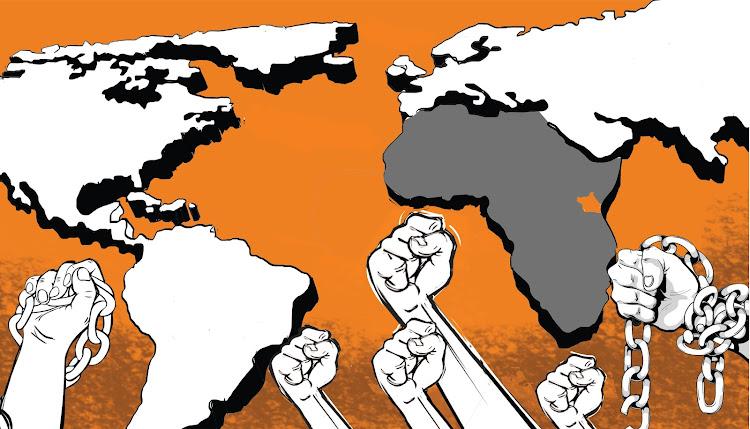
To continue their interventionist policies and repress the Haitian people, the United States is attempting to use some black faces in Haiti, at least for the time being, in my opinion. So, looking at it through our own lens, we can see that this is an imperialist intervention; the US is merely utilizing Kenya to maintain its political, social, and economic dominance over the country.
Using developing nations as pawns in foreign interventions by Western powers is, in my opinion, a serious and pressing problem right now, and not just in this particular instance. Just recently, we saw coups in several West African countries, including Burkina Faso, Niger, and the Sahel, and then there was the threat of an invasion by ECOWAS.
The same dynamic is at work there as well; major imperialist powers can't always rely on sending their own armies to crush poorer nations on the periphery. However, they will seek out these other neocolonial players to represent them, providing them with cover to essentially use violence to enforce their political will.
The primary argument in favor of staffing a police force with a thousand officers is the positive impact on the economy and the creation of jobs. Just in case you forgot, the Kenyan government has been trying to convince the people that they should stop looking for work overseas and start making jobs for themselves. Thus, it is clear that the ruling class's peculiarity—particularly in an African context—is that they seek answers to national problems from those who are still under their control. In fact, these neocolonialists constitute the ruling elite in the Northern Hemisphere, especially in the US and its European allies.
The Worrying Economic Situation in Kenya
This government is making decisions that aren't good for the working people of Kenya, even though they know what those people actually need and what the biggest problems are. It is not sufficient to examine most Kenyan issues through the lens of Kenya's internal conditions; this is particularly true of issues confronting the Kenyan working class. Eurocentric viewpoints and intentions have largely shaped Kenyan policy since the 1990s, with little regard for the unique circumstances and requirements of Kenyan citizens.
This basically indicates that the Kenyan people have not had a chance to have their policies heard and implemented. The U.S.-perfected neoliberal institutions, like the World Bank and the International Monetary Fund, have been cruel to Kenya. Since Kenya's unemployment rate is climbing daily, that has only made matters worse for the working class.
Actually, many young people nowadays are clueless about what to do first thing in the morning. Forget about having a job that matters. That implies they enroll in classes, finish high school, and then have no idea what the future brings.
The fact that Kenya has experienced deindustrialization is the second component. That means there is no real effort to create jobs in Kenya, and the country has been reduced to a raw material exporter as a result of the neoliberal policies that have been imposed on its citizens. Because of this, a large number of Kenyan jobs are leaving the country.
There has been a lot of talk from the present administration, but no real action in terms of implementation. A reality for the Kenyan masses—basically, the struggle between the haves and the have-nots—formed the basis of President Ruto's campaign. By claiming that a small number of families control this nation, he made it apparent that he wanted to win over the youth. Those few families have shattered the hope for a better future for the people of Kenya. He went on record as someone who rose from modest beginnings to become genuinely wealthy.
But the bottom-up economic model that his administration has been touting has failed to materialize thus far. It is widely known that this administration has only been in power for a year, so we should be understanding. Every time neoliberal policies are enacted to address the unemployment issue; a trickle-down effect is probably being reinforced.
Following last year's signing of an agreement to send young workers to Germany, rumors of meetings with multinational corporations like Apple and Microsoft spread, and eventually, the promise was made that most Kenyans will find employment abroad. Despite the great promise of this idea, it is not the solution, particularly in light of the shame of sending police to Haiti under the pretense of a job, where many could die. They have no idea that they are serving the imperialist masters.
There are more than 40 million people living in Kenya, and according to a 2020 report by the Kenya National Bureau of Statistics (KNBS), 15.9 million of them are poor and another 23.4 million are multi-dimensionally poor. It is safe to assume that a handful of people, including some international investors, control a disproportionate amount of Kenya's wealth. Although the exact percentage held by foreigners is not readily apparent from the statistics, it is clear that a large portion of Kenya's wealth is held by foreigners due to foreign investments within the country.
The real need for the Kenyan people lies in a concerted attempt to tackle land-related matters, as they form the bedrock of Kenyan activism. A small number of wealthy families continue to hold onto Kenyan land on behalf of multinational corporations. They can move forward with plans to industrialize systematically once that is fixed, and then they can discuss mechanizing agricultural land.
The president is currently addressing Pan-Africanism, though. A new financial architecture is something he mentions as being necessary. The suffering of Black people is another topic he brings up, though this may just be empty rhetoric. If this government lets its citizens be used to attack the most defenseless, especially their Black brothers and sisters, it will fail domestically and internationally.
Why Sending the Kenyan Police is a Bad Idea
Because of an unexpected and intolerable gang problem, the Haitian police force is unable to claim that they can be professionally equipped to assist their people through yet another imperialist intervention. Some have questioned and criticized the notion that Kenya can go from believing in this police force's ability to bring stability and peace to Haiti to suddenly believing in their ability to overcome their many moral and ethical shortcomings.
Furthermore, there are striking similarities between the situations in Haiti and Kenya, namely the fact that a small number of affluent, politically connected families control the government and the economy. You have all these plans aimed at bettering these nations, but they don't actually involve investing in their social or economic development or even making any progress toward development. However, instead of fostering economic growth and opportunity within the nations themselves, the plans merely call for increased military intervention and the export of labor.
There was no mistaking Ruto's lack of Haitian knowledge during his meeting with Dominican President Luis Abinader. Due to a lack of self-acceptance, the Dominican Republic has maintained a racist relationship with Haitians. Consequently, Haitians have been being killed. Aside from that, our president went and inked a deal with the Dominican president's son to have his country back Kenyan forces in Haiti. The Haitians watching this must have felt like they were being slapped in the face.
Supporting Haiti’s Defense as the Global Human Collective
Well, the most important thing is for everyone to work together to fight back against the constant calls to help Haiti. There seems to be an assault on Haiti from every direction.
One thing I think we need to do is fight back against what the Western media says about Haiti after the vote that approved the intervention. There were two significant abstentions among the permanent members, so the vote was not unanimous. This operation is being carried out by a mercenary group rather than a United Nations mission. In Haiti, Kenyan police will play the role of hired guns.
The public must strongly disagree with the way the media portrays this gang violence. There are gangs, sure, but there are also cartels in Mexico. There has been no recent demand to dispatch a United Nations mission to Jamaica or Mexico, two countries with far more severe gang problems. The Core Group, the United States, and BINUH are the most powerful gangsters in Haiti since they are behaving gangsterishly while ruling the country and seemingly getting away with everything.
Haiti has been under US occupation for the past 20 years, and the US is using the UN to push this multilateral imperialism, in my opinion. We need to have a conversation with the masses on the African continent and tell them this. I believe it is important that we speak to our friends and alter the storyline. We must peruse the text; we must observe the events unfolding. In my opinion, that is the most advantageous aspect.
Above all else, the American people must demand that their representatives in Congress end all funding for the Department of Defense and any further use of taxpayer funds for imperial interventions. This is a proxy war, and the United States has already lost the war in Ukraine with all this money. The United States must end proxy wars. In the end, Haitians should not be portrayed as barbarians in the media, but as human beings.
What transpired in Iraq, Haiti, and Libya are all too similar to be ignored if we stopped viewing Haiti as an isolated incident. When Russia and China did not participate in a vote, NATO was able to take down Libya, weren't they? Haiti must no longer be viewed as an exception but rather as the largest testing ground for an empire. This fresh perspective allows us to perceive opportunities for unity and resistance to the US empire.
Every year, between forty thousand and fifty thousand people die in the United States as a result of gun violence. Where exactly is the UN peacekeeping mission? While it's easy to point fingers and say that any country (or, more accurately, the vast majority of countries) has a social problem that warrants intervention, only a select handful of nations actually get this treatment time and time again.
The Role of Kenyans in Supporting Haiti’s Defense
First and foremost, the Kenya Police Service's deployment to Haiti is illegal, even under Kenyan law. Thus, it can be inferred that both the US president and the president of Kenya are aware of this transgression. Therefore, the initial political step will be to challenge this within Kenya's legal system and attempt to make this government answer for its actions.
Second, there is the court of public opinion, which is arguably the most influential. Keep reminding the cops that the problems they're facing in our nation are nothing compared to what's happening in Haiti. Haiti has a long history of fierce resistance in the face of oppression, and centuries after fighting to become the only slave colony to fight for its freedom and prevail, I am sure it will not be an easy task. Also, your chances of success overseas are next to nothing if you have no backers at home.
In reality, the problem surrounding Haiti's insecurities will only get worse if foreign police or military forces arrive on the scene.
Truthfully, the oppressive ideologies and practices that were imposed on Kenyan descendants during colonialism and continue to exist covertly today are the real motivations behind this impending war abroad. Imperialists dislike Haiti for a number of reasons, one of which is that they likely would not have sparked as many global movements if the first slave revolution hadn't occurred.
So, I choose not to keep quiet so that the Kenyan people can see the real picture of their relationships with Haiti and Africa. Why? Because I have faith that we will quickly move on from the Haitian issue and establish our own platforms, resolving to reject antiquated policies that will inevitably have a negative impact on our economy and future prospects.
Ibrahim Traore, a Fulfilment of a Revolutionary’s Enduring Prophecy and the Emerging Face of True Pan-Africanism
1984: Is Kenya Descending into Orwell's Dystopian world?
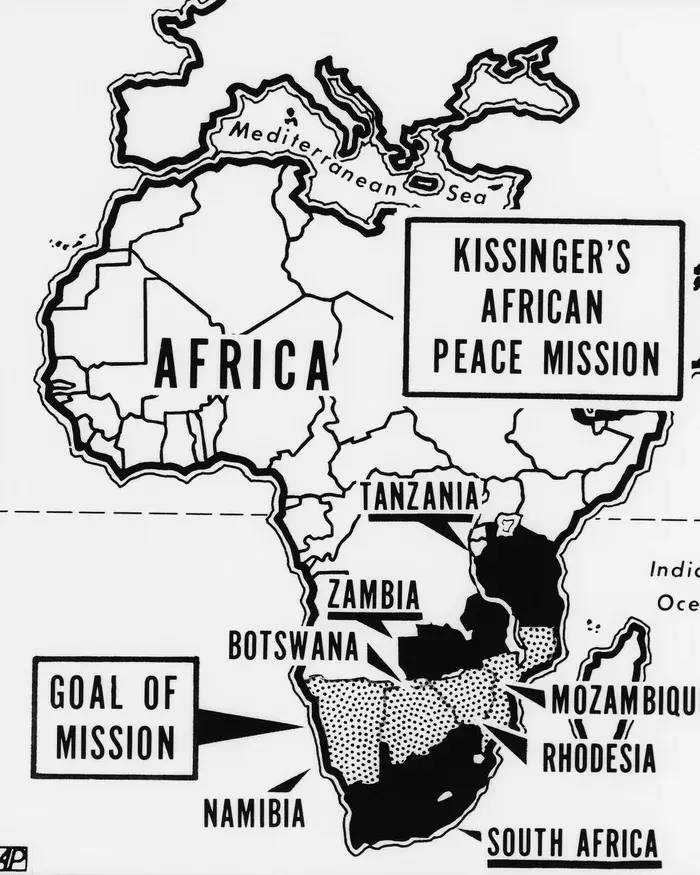
Kissinger Report, the Diabolical Policy Agenda to Depopulate Africa
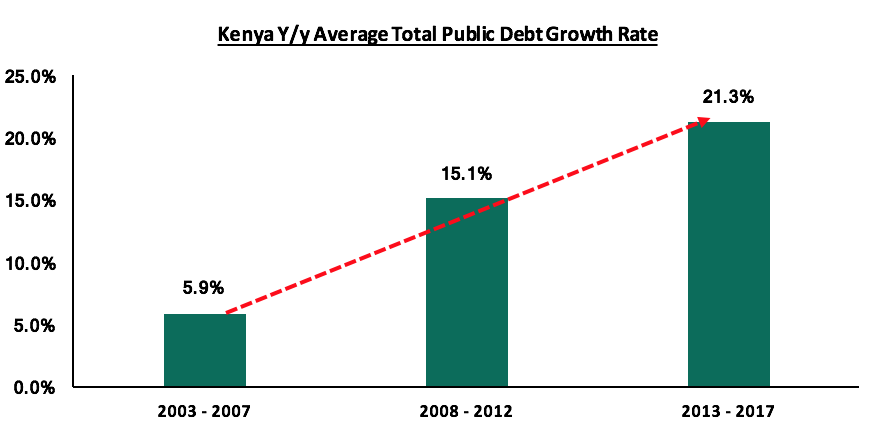
Increasing Domestic Borrowing Starves Kenyans Access to Private Business Loans

Push for a Cashless Society Threatens More Control, Taxation, and Surveillance of the Citizens
Money Lies That Keep You in Poverty