

Victor Koech
July 30, 2024
In Kenya this past month, three things happened: Senators along with other politicians took a hard look in the mirror; President William Ruto convened an X Space to debate emergent concerns from the presidency with the youth; and the president ultimately disbanded and began reconstituting his cabinet.
These occurrences were unfathomable two months ago, before deadly riots erupted. For more than four weeks, young Kenyans took to the streets, first demanding a rejection of tax ideas featured in a Finance Bill, before targeting the entire government for perceived as well as real corruption, lavishness, and impunity.
Kenyan senators spent the entire day on July 3, 2024, discussing the status of the country in the aftermath of weeks of deadly youth protests that killed at least 50 people, injured hundreds, and destroyed properties of unknown worth. The youth's protests, which appeared to be dissipating as the administration conceded to some of their demands, were interpreted by many as an indictment of the country's leadership. They were greatly embarrassed that their children had to bring attention to the fact that they are completely exposed as leaders.
Presently, we are experiencing unprecedented circumstances, rendering conventional solutions that were previously proposed ineffective. Due to the current state of affairs in the nation, it is imperative that a comprehensive reform be implemented.
President Ruto believed that the demonstrations would stop when he vetoed out the Finance Bill 2024, which included tax measures. Instead, other demands surfaced, one of which was that he goes as well. He claimed he wouldn't. However, he acknowledged that protests had compelled him to reevaluate his approach.
Some of those who wanted him to leave were not even Generation Zs; they included politicians such as Jimi Wanjigi, a businessman who attempted to run for president in 2022 but was unsuccessful. There was also Miguna Miguna, a lawyer from Toronto, Canada.
Wanjigi claimed Ruto had "lost his moral legitimacy to govern" by failing to deal with protesters. He proposed that the president establish interim authority through a convention, which would bring in a time period for another election. The former presidential candidate believes Ruto cannot handle the youth uprising.
Naturally, Ruto cannot possibly resign from a position he pursued with such fervour at this time.
Rather, most would concur that he has made advantage of the issue to show how Kenya is maturing as a democracy. In a televised appearance earlier in the month, he reminded the nation that the protests are the result of a constitution that permits citizens to picket and express their unhappiness with any terrible policy. While he condemned the violence that erupted in the final days of the protests, he promised to carry out some of the demands, such as purging of the corrupt, cleaning up his backroom personnel for efficient communication, and agreeing to "meet" the youth on X Spaces.
On a national level, those leaders who had previously flaunted their ostentatious wealth started to tone it down. One of them, who was recently observed paying Ksh20 million to a church function, stated that he was considering leaving politics. Another individual abandoned a costly timepiece that he had been sporting. Another one was compelled to reveal the store from which he purchases his shoes. For the most part, politicians began to advocate for the people, even rejecting calls to increase their salaries.
They recognised that they were expected to lead by example in their capacity as leaders. Things hadn't been working properly, and people have been experiencing a great deal of hardship. Therefore, the sudden display of opulence by those in positions of power was cause for concern. This is what Generation Z is currently against.
Senators such as Senate Deputy Minority Whip Edwin Sifuna recognised early on that the situation did not call for them to advise the young people what to do. They needed to show that they were listening to what the youth were saying by looking in the mirror and demonstrating that they understood what they were saying.
The protesters' headache extends beyond leaders' integrity. It also has to do with law enforcement officials under Ruto's administration flagrantly abusing the law. Several activists had already openly petitioned the police following the kidnapping of several of their comrades.
The problem, however, is that those kidnappings do not fare well in abroad. President Ruto has informed the world this democracy is maturing and operates in accordance with established institutions and regulations. He frequently invoked the Supreme Court as affirming his victory. And courts have frequently delayed his moves, which he respected.
While visiting the White House in May, Ruto emphasised the importance of focussing on the need to enhance democracy globally in light of recent illegitimate government changes that have jeopardised democratic advances. Not only had he portrayed himself as a saviour, even offering to dispatch troops to Haiti, but he had also been critical of coup plotters across the continent. In fact, 200 police officers were sent to Haiti as part of the Multinational Security Support operation, which was backed by the UN, while protests were going on back home.
For a man who positioned himself as an advocate of new Pan-Africanism, President William Ruto finds himself in a bind due to these dynamics. The protests erupted after the United States officially identified Kenya as a key non-NATO ally, which might force Nairobi to use some American defensive technologies at a cost. Although Washington and its allies stayed out of the tax problem, they did ask for calm and mostly shut down their missions whenever there were protests.
After days of deadly protests, the President ultimately had to drop the controversial Finance Bill 2024. The bill's withdrawal will result in a budget gap of around Sh300 billion ($2.7 billion).
Additionally, the International Monetary Fund (IMF) is putting pressure on him and imposing strict restrictions because it wants the almost two-year-old administration to increase taxes in order to pay off debts and fund its operations. The IMF has pressed Dr. Ruto to reduce needless spending while increasing taxes to fund its operations as well as service existing loans. Even though the IMF had anticipated the rise in anti-tax demonstrations, it urged the government to stick to its current revenue-raising plans.
As a result, President Ruto is left with little choices except to enact radical transformation because the elections in 2027 are drawing near and ethnic arithmetic just will not be enough to carry the day, as the demonstrations of Generation Z have demonstrated.
By dramatic reform, I mean beginning with low-hanging fruit. Things that are within his power to execute, include the recent reorganisation of his cabinet and dismissal of key officials, or the prosecution of cabinet secretaries charged with corruption. Insisting that the policing oversight authority, IPOA, conduct a comprehensive investigation into the abductions and extrajudicial murders that occurred during the demonstration period, and that those who were implicated face disciplinary action.
The president must move quickly because his political foes are rapidly regrouping.
Some observers believe that the crises were caused by leaders' personal styles and failing to read the audience. He intended to tax even unemployed Kenyans. He has overextended his imagination.
The youth uprising stems from frustration, scepticism, and a loss of faith in adults. It is an uprising against false promises and deception.
They have come to the realization that they are the only ones who can truly control their own destiny.
Much like Zacchaeus, the President must descend from the Sycamore tree of pride, aloofness, and entitlement. Kenyans are his bosses, not his servants.
The road forward? It is imperative that he becomes more serious in his fight against corruption. He must also remove the incompetent individuals from his circle of acquaintances.
Ibrahim Traore, a Fulfilment of a Revolutionary’s Enduring Prophecy and the Emerging Face of True Pan-Africanism
1984: Is Kenya Descending into Orwell's Dystopian world?
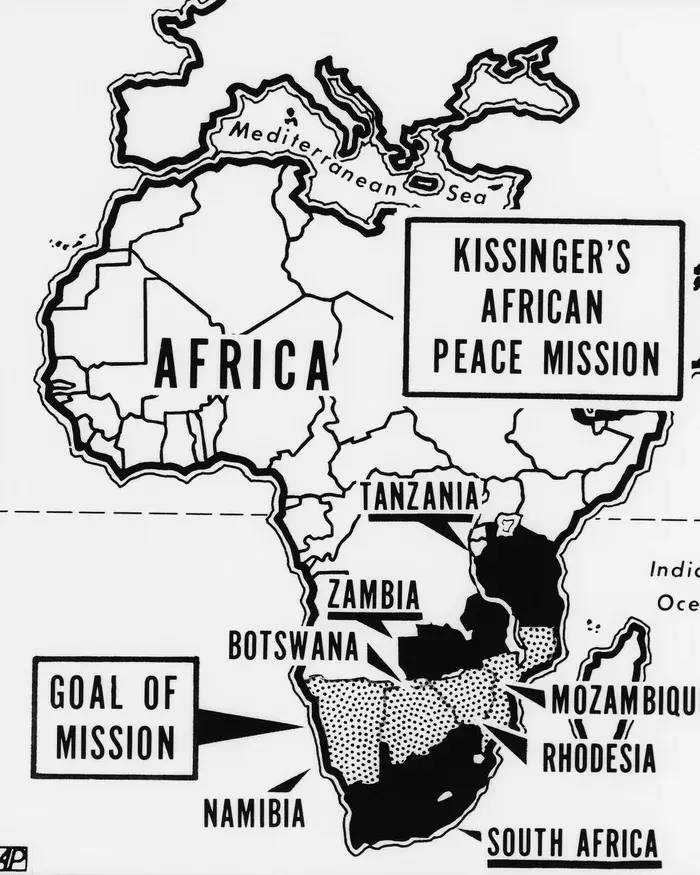
Kissinger Report, the Diabolical Policy Agenda to Depopulate Africa
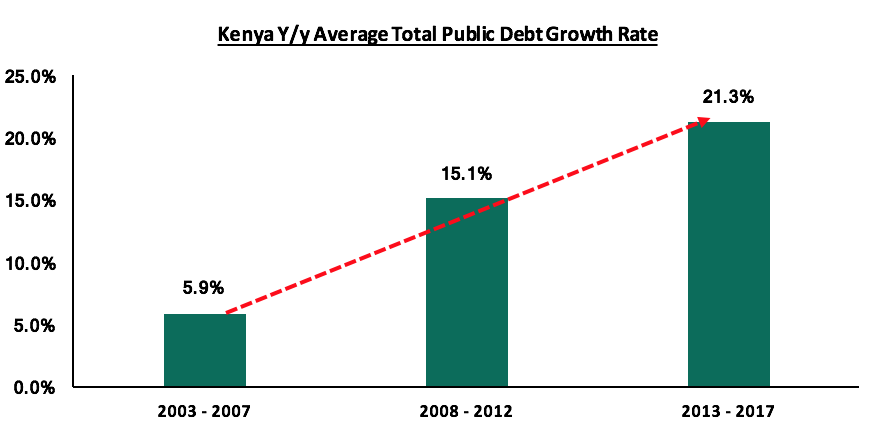
Increasing Domestic Borrowing Starves Kenyans Access to Private Business Loans

Push for a Cashless Society Threatens More Control, Taxation, and Surveillance of the Citizens
Money Lies That Keep You in Poverty