
Victor Koech
September 23, 2024
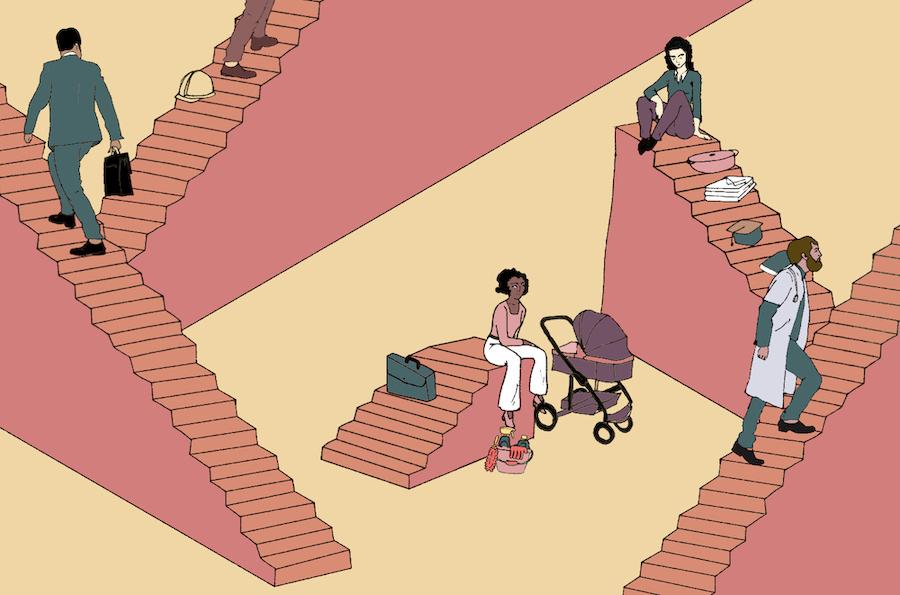
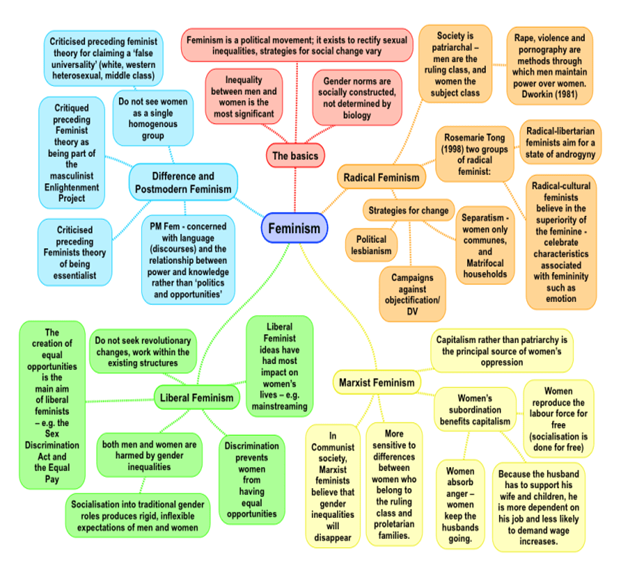
Feminism started out as social activism geared towards fighting for everyone’s equal freedom. Since women have historically not been accorded the same freedom as men, feminist ideology has striven for women’s rights to vote, own property, and access equal opportunities for education and career advancement. These were and still are obviously noble pursuits; however, now the feminist ideology has emerged as some kind of untethered monstrosity, hell-bent on exterminating every ounce of masculinity from contemporary society.
Consequently, the social institutions of marriage and family have been left in tatters, all because of some destructive ideologies emerging, especially from radical feminism and its retributive stance on any masculine tendency supposedly deemed "oppressive" to women. As a result, it is prudent for me to debunk feminist rhetorical falsehoods such as power imbalance (toxic masculinity, patriarchy, male hegemony), economic inequality (gender pay gap, unequal access to education and career opportunities), and sex and gender discrimination (gendered roles, stereotypes, male gaze, objectification).Moreover, it is of critical importance to show how harmful the feminist perspective has become following the rise in divorce rates, decline in marriage rates, decline in birth rates, rise in single-parent homes, and the systematic dismantlement of the family unit in contemporary society.
Many men, on their own, can be jerks. There is no doubt about it. Indeed, we've met more than our share of them. However, the focus of this publication series is not on first-person accounts of experience. I believe that having more information, becoming truthful, and not trying to project our own problems onto others could alleviate a lot of the overall resentment directed at men from women as a group.
Listed below are the research sources used in the entire series of publications. The source references mainly include peer reviewed journals and latest statistics that debunk the myth of gender inequality and lays bare the fallacies of the feminist rhetoric.
Next article: https://kimuzi.com/blog/debunking-the-idea-of-a-power-imbalance-in-the-feminist-rhetoric
Sources:
1. Thompson, A. K. Feminist Theory: A Summary for A-Level Sociology. ReviseSociology https://revisesociology.com/2017/02/03/feminist-theory-summary-sociology/ (2017).
2. Coulombe, N. Do Women Really Want Equality? Medium https://nikitaccoulombe.medium.com/do-women-really-want-equality-4374910f2236 (2022).
3. Parker-Pope, T. Cancer Funding: Does It Add Up? Well https://archive.nytimes.com/well.blogs.nytimes.com/2008/03/06/cancer-funding-does-it-add-up/ (2011).
4. BLS. Census of Fatal Occupational Injuries Summary, 2021 - 2021 A01 Results. https://www.bls.gov/news.release/cfoi.nr0.htm (2021).
5. CDC. Suicide Data and Statistics. https://www.cdc.gov/suicide/suicide-data-statistics.html (2023).
6. Duffin, E. Share of homeless individuals in the U.S. by gender 2020. Statista https://www.statista.com/statistics/962171/share-homeless-people-us-gender/ (2023).
7. Hamblin, J. What Doctors Make. The Atlantic https://www.theatlantic.com/health/archive/2015/01/physician-salaries/384846/ (2015).
8. McArdle, E. The freedom to say ‘no’. Boston.com (2008).
9. Blume-Kohout, M. Understanding the gender gap in STEM fields entrepreneurship. US Small Business Administration Office of Advocacy Report (2014).
10. Snyder, B. Women aren’t in IT because they don’t want to be in tech. InfoWorld https://www.infoworld.com/article/2631428/women-aren-t-in-it-because-they-don-t-want-to-be-in-tech.html (2008).
11. Pinker, S. The Sexual Paradox: Men, Women and the Real Gender Gap. (Scribner, 2009).
12. Qian, Y. Gender Asymmetry in Educational and Income Assortative Marriage. Journal of Marriage and Family 79, 318–336 (2017).
13. Bennhold, K. In Sweden, Men Can Have It All - The New York Times. https://www.nytimes.com/2010/06/10/world/europe/10iht-sweden.html?_r=0 (2010).
14. Gottlieb, L. Does a More Equal Marriage Mean Less Sex? The New York Times (2014).
15. Mehta, V. Are Alpha Males a Myth or a Reality? | Psychology Today. https://www.psychologytoday.com/intl/blog/head-games/201412/are-alpha-males-myth-or-reality (2014).
16. Tuttle, B. Women Won’t Date Unemployed Men: It’s Just Lunch Survey |. TIME https://business.time.com/2012/06/29/no-job-no-date-for-you/ (2012).
17. Greenstone, M. & Looney, A. The Marriage Gap: The Impact of Economic and Technological Change on Marriage Rates | The Hamilton Project. https://www.hamiltonproject.org/papers/the_marriage_gap_the_impact_of_economic_and_technological_change_on_ma/ (2012).
18. Livingston, G. Growing Number of Dads Home with the Kids. Pew Research Center’s Social & Demographic Trends Project https://www.pewresearch.org/social-trends/2014/06/05/growing-number-of-dads-home-with-the-kids/ (2014).
19. Kitroeff, N. Investing (More) in Daughters. The New York Times (2014).
20. Gabriel, A. S., Butts, M. M., Yuan, Z., Rosen, R. L. & Sliter, M. T. Further understanding incivility in the workplace: The effects of gender, agency, and communion. J Appl Psychol 103, 362–382 (2018).
21. Reynolds, T., Baumeister, R. F. & Maner, J. K. Competitive reputation manipulation: Women strategically transmit social information about romantic rivals. Journal of Experimental Social Psychology 78, 195–209 (2018).
22. Benenson, J. F., Markovits, H., Thompson, M. E. & Wrangham, R. W. Under threat of social exclusion, females exclude more than males. Psychol Sci 22, 538–544 (2011).
23. Vrangalova, Z., Bukberg, R. E. & Rieger, G. Birds of a feather? Not when it comes to sexual permissiveness. Journal of Social and Personal Relationships 31, 93–113 (2014).
24. Benenson, J. F. & Christakos, A. The greater fragility of females’ versus males’ closest same-sex friendships. Child Dev 74, 1123–1129 (2003).
25. Crick, N. R., Casas, J. F. & Ku, H.-C. Relational and physical forms of peer victimization in preschool. Developmental psychology 35, 376 (1999).
26. Archer, J. Does sexual selection explain human sex differences in aggression? Behav Brain Sci 32, 249–266; discussion 266-311 (2009).
27. Benenson, J. F. & Schinazi, J. Sex differences in reactions to outperforming same-sex friends. British Journal of Developmental Psychology 22, 317–333 (2004).
28. Smith, S. G. et al. The national intimate partner and sexual violence survey: 2015 data brief–updated release. (2018).
29. Abetz, J. & Moore, J. “Welcome to the mommy wars, ladies”: Making sense of the ideology of combative mothering in mommy blogs. Communication Culture & Critique 11, 265–281 (2018).
30. Benenson, J. F. et al. Greater discomfort as a proximate cause of sex differences in competition. Merrill-Palmer Quarterly (1982-) 225–247 (2002).
31. Vaillancourt, T. & Sharma, A. Intolerance of sexy peers: Intrasexual competition among women. Aggressive behavior 37, 569–577 (2011).
32. Benenson, J. F. et al. Human males appear more prepared than females to resolve conflicts with same-sex peers. Human Nature 25, 251–268 (2014).
33. Benenson, J. F., Hodgson, L., Heath, S. & Welch, P. J. Human sexual differences in the use of social ostracism as a competitive tactic. International Journal of Primatology 29, 1019–1035 (2008).
34. Vaillancourt, T. Do human females use indirect aggression as an intrasexual competition strategy? Philosophical Transactions of the Royal Society B: Biological Sciences 368, 20130080 (2013).
35. Markovits, H., Gauthier, E., Gagnon-St-Pierre, É. & Benenson, J. F. High status males invest more than high status females in lower status same-sex collaborators. Plos one 12, e0185408 (2017).
36. Duguid, M. Female tokens in high-prestige work groups: Catalysts or inhibitors of group diversification? Organizational Behavior and Human Decision Processes 116, 104–115 (2011).
37. Warning, R. & Buchanan, F. R. An exploration of unspoken bias: Women who work for women. Gender in Management: An International Journal 24, 131–145 (2009).
38. Demos. The Use of Misogynistic Terms on Twitter. https://www.demos.co.uk/wp-content/uploads/2016/05/Misogyny-online.pdf (2016).
39. Hill, A. & correspondent, social affairs. In-law tensions hit women hardest. The Observer (2008).
40. Livingston, G. & Cohn, D. Share of births to unmarried women dips, reversing a long trend. Pew Research Center https://www.pewresearch.org/fact-tank/2015/06/17/share-of-births-to-unmarried-women-dips-reversing-a-long-trend/.
41. Brewer, J. Fatherlessness and Crime | America First, Always. https://americafirstpolicy.com/latest/20220825-fatherlessness-and-crime (2022).
42. Kramer, S. U.S. has world’s highest rate of children living in single-parent households. Pew Research Center https://www.pewresearch.org/fact-tank/2019/12/12/u-s-children-more-likely-than-children-in-other-countries-to-live-with-just-one-parent/ (2019).
43. Jackson, A. P., Preston, K. S. J. & Franke, T. M. Single Parenting and Child Behavior Problems in Kindergarten. Race Soc Probl 2, 50–58 (2010).
44. van Duin, L. et al. The role of adverse childhood experiences and mental health care use in psychological dysfunction of male multi-problem young adults. European child & adolescent psychiatry 28, 1065–1078 (2019).
45. Gottman, J. & Silver, N. The Seven Principles for Making Marriage Work: A Practical Guide from the Country’s Foremost Relationship Expert. (Harmony, 2015).
46. Perry, B. D. & Szalavitz, M. Born for Love: Why Empathy Is Essential--and Endangered. (William Morrow Paperbacks, 2011).
47. Carlson, M. J. & Corcoran, M. E. Family Structure and Children’s Behavioral and Cognitive Outcomes. Journal of Marriage and Family 63, 779–792 (2001).
48. Behere, A. P., Basnet, P. & Campbell, P. Effects of family structure on mental health of children: A preliminary study. Indian journal of psychological medicine 39, 457–463 (2017).
49. Habeeb, L. & Leven, M. Why Won’t Liberals Talk about the Most Important Kind of ‘Privilege’ in America? National Review https://www.nationalreview.com/2015/03/why-arent-we-talking-about-most-important-form-privilege-america-lee-habeeb/ (2015).
50. ASPE. Cohabitation and Marriage Rules in State TANF Programs. ASPE https://www.aspe.hhs.gov/reports/cohabitation-marriage-rules-state-tanf-programs-0 (2009).
51. Huang, W. Parents’ reliance on welfare leads to more welfare use by their children, study finds. https://news.uchicago.edu/story/parents-reliance-welfare-leads-more-welfare-use-their-children-study-finds (2015).
52. Hoffmann, J. P. The Community Context of Family Structure and Adolescent Drug Use. Journal of Marriage and Family 64, 314–330 (2002).
53. Collins, L. Family dinnertime a powerful drug, tobacco, alcohol deterrent. Deseret News https://www.deseret.com/2011/9/27/20218786/family-dinnertime-a-powerful-drug-tobacco-alcohol-deterrent (2011).
54. Jeste, D. V. & Gawronska, M. Triumphs of Experience: The Men of the Harvard Grant Study. (2014).
55. Seidel, F. L. P. The Proclivity of Juvenile Crime in Fatherless Homes: an Urban Perspective. (University of Arizona Global Campus, 2022).
56. Ellis, B. J. et al. Does Father Absence Place Daughters at Special Risk for Early Sexual Activity and Teenage Pregnancy? Child Dev 74, 801–821 (2003).
57. Rochester Area Fatherhood Network. Research and Statistics. Rochester Area Fatherhood Network http://www.rochesterareafatherhoodnetwork.org/statistics.
58. Kofler-Westergren, B., Klopf, J. & Mitterauer, B. Juvenile delinquency: Father absence, conduct disorder, and substance abuse as risk factor triad. International Journal of Forensic Mental Health 9, 33–43 (2010).
59. Taboom. Fatherlessness and Crime in Kenya. Taboom Media https://taboommedia.com/2019/11/20/fatherlessness-and-crime-in-kenya/ (2019).
60. Hartley, S. L., Seltzer, M. M., Barker, E. T. & Greenberg, J. S. Marital Quality and Families of Children with Developmental Disabilities. Int Rev Res Dev Disabil 41, 1–29 (2011).
61. Feniger, Y. & Lefstein, A. How not to reason with PISA data: An ironic investigation. Journal of Education Policy 29, 845–855 (2014).
62. Marripedia. Effects of Marriage on Children’s Education. https://marripedia.org/effects.of.marriage.on.children.s.education (2023).
63. Guidubaldi, J., Perry, J. D. & Nastasi, B. K. Growing up in a divorced family: Initial and long-term perspectives on children’s adjustment. Applied social psychology annual (1987).
64. Scott, E. S. & Emery, R. E. Gender politics and child custody: The puzzling persistence of the best-interest standard. Law & Contemp. Probs. 77, 69 (2014).
65. Straus, M. A. Dominance and symmetry in partner violence by male and female university students in 32 nations. Children and Youth Services Review 30, 252–275 (2008).
66. Sigurdardottir, S., Halldorsdottir, S. & Bender, S. S. Deep and almost unbearable suffering: consequences of childhood sexual abuse for men’s health and well-being. Scand J Caring Sci 26, 688–697 (2012).
67. Cloitre, M., Tardiff, K., Marzuk, P. M., Leon, A. C. & Portera, L. Consequences of Childhood Abuse Among Male Psychiatric Inpatients: Dual Roles as Victims and Perpetrators. J Trauma Stress 14, 47–61 (2001).
68. Edge. The Science of Gender and Science: Pinker vs. Spelke, a Debate | Edge.org. https://www.edge.org/event/the-science-of-gender-and-science-pinker-vs-spelke-a-debate (2023).
69. Wilcox, B. Mind the Marriage Gap: The 2014 Election Edition. Institute for Family Studies https://ifstudies.org/blog/mind-the-marriage-gap-the-2014-election-edition.
70. Parker, K. Modern Parenthood. Pew Research Center’s Social & Demographic Trends Project https://www.pewresearch.org/social-trends/2013/03/14/modern-parenthood-roles-of-moms-and-dads-converge-as-they-balance-work-and-family/ (2013).
71. Park, A. Why Women Are More Likely to Ask for a Divorce | Time. https://time.com/4007174/which-spouse-asks-for-divorce/ (2015).
72. Pew Research Center. Millennials in Adulthood. Pew Research Center’s Social & Demographic Trends Project https://www.pewresearch.org/social-trends/2014/03/07/millennials-in-adulthood/ (2014).
73. Muñoz Soro, J. F. & Serrano-Cinca, C. A model for predicting court decisions on child custody. PLoS One 16, e0258993 (2021).
74. Haney, L. Incarcerated fatherhood: The entanglements of child support debt and mass imprisonment. American Journal of Sociology 124, 1–48 (2018).
75. Tait, A. Debt Governance, Wealth Management, and the Uneven Burdens of Child Support. Nw. UL Rev. 117, 305 (2022).
76. Larsen, C. A. The rise and fall of social cohesion: The construction and de-construction of social trust in the US, UK, Sweden and Denmark. (Oxford University Press, 2013).
77. Hampton, K., Goulet, L. S. & Purcell, K. Part 4: Trust, support, perspective taking, and democratic engagement. Pew Research Center: Internet, Science & Tech https://www.pewresearch.org/internet/2011/06/16/part-4-trust-support-perspective-taking-and-democratic-engagement/ (2011).
78. Charlton, B. M. et al. Sexual orientation-related disparities in employment, health insurance, healthcare access and health-related quality of life: a cohort study of US male and female adolescents and young adults. BMJ Open 8, e020418 (2018).
79. Popenoe, D. & Whitehead, B. D. Social indicators of marital health and wellbeing. The state of our unions 2000: The social health of marriage in America 2002 21–36 (2012).
80. Coulombe, N. Why Do We Think Women Are Better People? Medium https://nikitaccoulombe.medium.com/we-think-women-are-better-people-but-theyre-not-f5ddd72ed7bd (2021).
81. Richardson, B. Liberal professors outnumber conservatives 12 to 1: Study. The Washington Times https://www.washingtontimes.com/news/2016/oct/6/liberal-professors-outnumber-conservatives-12-1/ (2016).
82. Lawrence, D. H. Lady Chatterley’s Lover and A Propos of’Lady Chatterley’s Lover’. vol. 2 (Cambridge University Press, 2002).

Ibrahim Traore, a Fulfilment of a Revolutionary’s Enduring Prophecy and the Emerging Face of True Pan-Africanism

1984: Is Kenya Descending into Orwell's Dystopian world?
Kissinger Report, the Diabolical Policy Agenda to Depopulate Africa
Increasing Domestic Borrowing Starves Kenyans Access to Private Business Loans

Push for a Cashless Society Threatens More Control, Taxation, and Surveillance of the Citizens
Money Lies That Keep You in Poverty