
Victor Koech
July 10, 2024
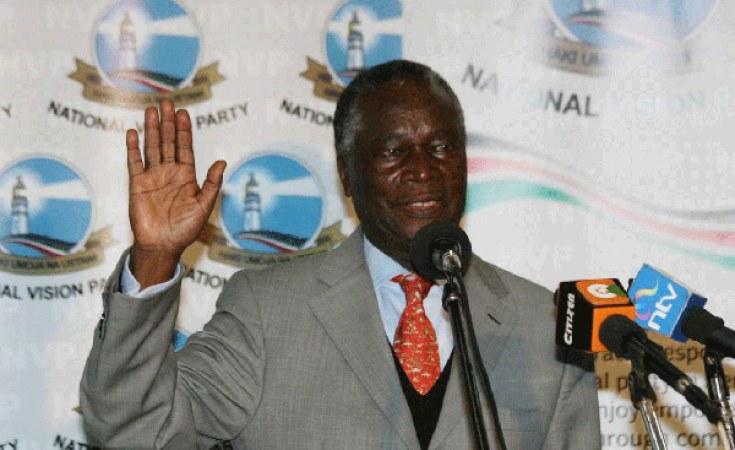
Remember the ‘Total Man’? This was the moniker to a man who made many politicians in Kenya tremble up until 2017, when he was laid to rest. Allow me to show you the man who messed with Kenyans big time, as well as how state capture works.
Nicholas Biwott was born on February 22, 1940, to Cheserem Soti and Maria Soti (I bet you have heard about the Mario Soti girls; he named them after his mother). He was born in Chebior Village, Keiyo District. I am a Keiyo, so I am writing this with some background knowledge.
He attended Tambach Intermediate School, then Kapsabet High School. He then attended the University of Melbourne in Australia between 1962 and 1964 to pursue a BSc in economics and political science. Indeed, he was an exceptionally bright individual and the smartest politician ever (Tom Mboya’s league).
Before Moi's appointment as Kenya's Vice President in 1967, Biwott gained prominence as the Division Officer of Nkubu, South Imenti Division. At just 34 years old, he ran for Keiyo South MP in 1974, but Stanley Kurgat, the incumbent, defeated him.
Five years later, in 1979, he contested again for the seat on a Kanu ticket, only for the opponent to "cordially agree" to step aside for him. He was unopposed. Given that Moi had just assumed the presidency a year earlier and that the power of the presidency protected Biwott, his longtime personal assistant, you would know this was intimidation.
Anyway, let's backtrack a little bit. He did return for a master's degree in economics at the University of Melbourne. It was here that he established connections and airlifted numerous Kalenjins to Australia years later, which is why the Kalenjin tribe, numbering more than 10,000, is the largest group of Kenyans in Australia. That's Biwott's work.
Now for the interesting part, the rise, ties, and connections of Biwott to Israel and Australia are noteworthy. He had worked in agriculture, treasury, and home affairs, but his 1979 promotion to Minister of State until the 1982 coup was his most powerful position.
Allow me to rewind a little to 1969, when Nicholas Biwott, now a postgraduate student, had little savings. He purchased a dealership in Eldoret called Eldoret Town International Harverster and renamed it Lima Ltd. During that period, the majority of Kenyans were receiving loans from various banking institutions. The post-independence banking policies worked in their favor.
Why did I go back? I returned because I want to establish a connection between Lima Ltd. and two construction companies, Solel Boneh and Gad Zeevi’s, HZ Company.
Who owned the two companies? Well, Solel Boneh. This was a company that gave cover to most Mossad operations in Africa. Why Mossad? For those who don't know, Mossad is an Israeli spy agency with one of the world's best ranks.
In 1973, there was a war that will forever remain in Israel's history. After winning the famous six-day war of 1967 and defeating all its enemies, Israel faced a surprise war in 1973, known as the Yom Kippur War, which was a surprise attack on its territory. Also, there was another Lebanese Civil War in 1975.
You may ask, why all these? Well, in 1973, one of the most prominent Israeli entrepreneurs, Mr. Vaizman Aharoni, made his debut in Kenya. And later on, in 1978, Gad Zeevis, another business mogul from Israel, owned HZ Company.
Why am I focusing on these companies? Well, Biwott made strong relationships with both businessmen and used his position to give them various construction contracts in the 70s and 80s. Mr. Zeevi landed one of Kenya's largest and most lucrative construction deals at the time.
After the 1982 coup attempt, Biwott was branded as the Total Man. This is because of the many disappearances of key figures and agitators of the Kanu regime until the 1990s. In fact, Moi's presidential limousine entourage only allowed GG Kariuki and Biwott to ride.
So, back to this. As more contracts came their way, HZ flourished. In fact, in 1982, when several banks were closing down, Biwott and another man, Alnoor Kassam, approached Zeevis and started the Trade Bank. Zeevi owned more than 70% of the bank, and he loaned Biwott the money he used to build the Yaya Center. Zeevi steadfastly refused to repay the loan.
The other man, Kassam, fearing the Israelis and his Mossad ties, ran to Canada. Someone informed him that he fled with $23 million, which resulted in the bank's collapse. Get the context? Biwott was smart.
That's where he started accruing his wealth. Aslam, another Pakistani national, ventured into the banking sector alongside a man known only by his initials, Hedam. Reports would later reveal that it was His Excellency Daniel Arap Moi (HEDAM). Mr. Troon of Scotland Yard testified in Ouko's murder report, identifying Nicholas Biwott as a person of interest in the murder case. Aslam would die inexplicably later. We all know the Kenyan drill.
So, back to Biwott. By the late 1980s, Total Man had grown to be extremely powerful. Everyone feared the name. In 1988, after the reorganization of the ministry of energy and regional development, he became the minister for energy and spearheaded the National Oil Corporation.
He used his power and influence here to support Gad Zeevi, who at the time owned one of Israel's largest oil companies, Paz. Gad Zeevi bought the US Mobil Company in Kenya and renamed it Kobil. You now know where Kobil, now Rubis, came from. How Biwott acquired it is another fascinating story.
At that time, HZ Company was the main contractor for government jobs, and this is where the scourge of state capture reared its head in Kenya’s political bureaucracy. State capture is a type of systemic political corruption in which private interests significantly influence a state’s decisions, driving government processes towards personal interests for profit at the expense of the public majority’s interests. Apparently, Biwott became one of Africa's wealthiest men as a result of pioneering numerous state capture operations.
An interesting deception here: The HZ and Solel Boneh were each competing for government contracts; if one won, it would subcontract the other one. They dominated the construction sector in the 1980s, causing many construction projects to be delayed. A case in point is right here in Nairobi if you ever seen the unfinished building in Yaya Center? This was the result of a disagreement with the Israeli contractors.
Anyway, back to Biwott's story. There was one great spy master called David Kimche, who was a British Israeli. He had conducted so many operations that the world feared him. He was nicknamed “the man with the briefcase.”
Biwott faced intense criticism following the country's first major scandal, the Goldenberg scandal, and the Ouko’s murder. The biggest mystery, though, is how he managed to own Kobil, Yaya Center, and other various things after falling out with Gad Zeevis, who went back to Israel to continue with the Zeevis company.
After Zeevis left Kenya, he fell out badly with the Total Man. The Total Man, aware of the Mossad operations in Nairobi, particularly those at the Nairobi Oasis Hotel, began to live in fear. He knew his time would come. That's why you hear numerous tales of his legend as a man of mystery and clandestine mannerisms. Tales of how he used to change cars, order food and not eat, and use secret routes have pervaded Kenyan society’s intrigue since the turn of the millennium.
The only person who made The Total Man live in fear was Gad Zeevis. However, if Zeevis had desired his disappearance, he would have done so without a trace. So, all those spy-film-like movements were perhaps merely theatrics. The Scotland Yard investigation named him as a person of interest in 1991. Moi faced heavy criticism, to the point that he faked Biwott's imprisonment.
After all the cases ceased, Biwott became the richest man in Kenya and it was his wit that propelled him there. Having been born around the Keiyo region (now Elgeyo Marakwet County), I recall that whenever we spotted a helicopter in my childhood, we knew it was Biwott’s. So, any of the million-dollar-worth choppers that flew above us were automatically assumed to be his.
However, all the lands he took, in Moiben, Ainabkoi, Keiyo, etc., were a result of corruption. The tarmacked roads in these regions were never built, until it took Ruto’s initiative to complete it between 2013 to 2018. The only thing Biwott gave back to his community in Keiyo was electricity, which was the least he could as the energy minister.
Biwott grabbed insurmountable amount of state resources from us. Whenever a patriot challenged him, he would be faced with about only two choices. Either submit to his severe intimidation, or get shuffled off this mortal coil.
It is important for Kenyans to remember that during the time when Biwott was the "Total Man" and held power over the notorious Special Branch, a number of patriotic Kenyans paid the ultimate price, including George Anyona, Titus Adungosi, Mwandawiro Mghanga, James Orengo, Adhu Awiti, John Khaminwa, Raila Odinga, Mohammed Ibrahim, Willy Mutunga, Odhiambo Olel, Katama Mukangi, Pheroze Nowrojee, Ngugi wa Thiong'o, Mukaru Ng'ang'a, Paul Muite, Otieno Kajwang', Kathurima M'Inoti, Gitobu Imanyara, Kenneth Matiba, Charles Rubia, Robert Ouko, Alexander Muge, and others. Others likes Gibson Kamau Kuria and Kiraitu Murungi fled to seek political asylum in the United States.
Biwott's atrocities against Kenyans during his time in power must not be ignored. Given his untimely demise, Kenyans will never get the chance to witness Nicholas Biwott brought to justice for the economic crimes, human rights violations, theft of public resources, and the untold number of lives lost during the Moi regime at his hands.
Alas, dead men tell no tales. To ensure such pioneering acts of state capture don’t go unpunished, their history needs to be brought effectively to majority public view and any future acts be punished severely lest history repeats. Just a few weeks ago, innocent youths were killed senselessly during the recent Gen Z protests. This was despite being peaceful and highly organized in rejection of similar looting of public resources among other numerous economic crimes.
The “Total Man” mentality of state capture that has been becoming more apparent each day since the present political regime came into power must
Remember the infamy of the name ‘Total Man’? This was the moniker to a man who made many politicians in Kenya tremble up until 2017, when he was laid to rest. Allow me to show you the man who messed with Kenyans big time, as well as how state capture works.
Nicholas Biwott was born on February 22, 1940, to Cheserem Soti and Maria Soti (I bet you have heard about the Mario Soti girls; he named them after his mother). He was born in Chebior Village, Keiyo District. I am a Keiyo, so I am writing this with some background knowledge.
He attended Tambach Intermediate School, then Kapsabet High School. He then attended the University of Melbourne in Australia between 1962 and 1964 to pursue a BSc in economics and political science. Indeed, he was an exceptionally bright individual and the smartest politician ever (Tom Mboya’s league).
Before Moi's appointment as Kenya's Vice President in 1967, Biwott gained prominence as the Division Officer of Nkubu, South Imenti Division. At just 34 years old, he ran for Keiyo South MP in 1974, but Stanley Kurgat, the incumbent, defeated him.
Five years later, in 1979, he contested again for the seat on a Kanu ticket, only for the opponent to "cordially agree" to step aside for him. He was unopposed. Given that Moi had just assumed the presidency a year earlier and that the power of the presidency protected Biwott, his longtime personal assistant, you would know this was intimidation.
Anyway, let's backtrack a little bit. He did return for a master's degree in economics at the University of Melbourne. It was here that he established connections and airlifted numerous Kalenjins to Australia years later, which is why the Kalenjin tribe, numbering more than 10,000, is the largest group of Kenyans in Australia. That's Biwott's work.
Now for the interesting part, the rise, ties, and connections of Biwott to Israel and Australia are noteworthy. He had worked in agriculture, treasury, and home affairs, but his 1979 promotion to Minister of State until the 1982 coup was his most powerful position.
Allow me to rewind a little to 1969, when Nicholas Biwott, now a postgraduate student, had little savings. He purchased a dealership in Eldoret called Eldoret Town International Harverster and renamed it Lima Ltd. During that period, the majority of Kenyans were receiving loans from various banking institutions. The post-independence banking policies worked in their favor.
Why did I go back? I returned because I want to establish a connection between Lima Ltd. and two construction companies, Solel Boneh and Gad Zeevi’s, HZ Company.
Who owned the two companies? Well, Solel Boneh. This was a company that gave cover to most Mossad operations in Africa. Why Mossad? For those who don't know, Mossad is an Israeli spy agency with one of the world's best ranks.
In 1973, there was a war that will forever remain in Israel's history. After winning the famous six-day war of 1967 and defeating all its enemies, Israel faced a surprise war in 1973, known as the Yom Kippur War, which was a surprise attack on its territory. Also, there was another Lebanese Civil War in 1975.
You may ask, why all these? Well, in 1973, one of the most prominent Israeli entrepreneurs, Mr. Vaizman Aharoni, made his debut in Kenya. And later on, in 1978, Gad Zeevis, another business mogul from Israel, owned HZ Company.
Why am I focusing on these companies? Well, Biwott made strong relationships with both businessmen and used his position to give them various construction contracts in the 70s and 80s. Mr. Zeevi landed one of Kenya's largest and most lucrative construction deals at the time.
After the 1982 coup attempt, Biwott was branded as the Total Man. This is because of the many disappearances of key figures and agitators of the Kanu regime until the 1990s. In fact, Moi's presidential limousine entourage only allowed GG Kariuki and Biwott to ride.
So, back to this. As more contracts came their way, HZ flourished. In fact, in 1982, when several banks were closing down, Biwott and another man, Alnoor Kassam, approached Zeevis and started the Trade Bank. Zeevi owned more than 70% of the bank, and he loaned Biwott the money he used to build the Yaya Center. Zeevi steadfastly refused to repay the loan.
The other man, Kassam, fearing the Israelis and his Mossad ties, ran to Canada. Someone informed him that he fled with $23 million, which resulted in the bank's collapse. Get the context? Biwott was smart.
That's where he started accruing his wealth. Aslam, another Pakistani national, ventured into the banking sector alongside a man known only by his initials, Hedam. Reports would later reveal that it was His Excellency Daniel Arap Moi (HEDAM). Mr. Troon of Scotland Yard testified in Ouko's murder report, identifying Nicholas Biwott as a person of interest in the murder case. Aslam would die inexplicably later. We all know the Kenyan drill.
So, back to Biwott. By the late 1980s, Total Man had grown to be extremely powerful. Everyone feared the name. In 1988, after the reorganization of the ministry of energy and regional development, he became the minister for energy and spearheaded the National Oil Corporation.
He used his power and influence here to support Gad Zeevi, who at the time owned one of Israel's largest oil companies, Paz. Gad Zeevi bought the US Mobil Company in Kenya and renamed it Kobil. You now know where Kobil, now Rubis, came from. How Biwott acquired it is another fascinating story.
At that time, HZ Company was the main contractor for government jobs, and this is where the scourge of state capture reared its head in Kenya’s political bureaucracy. State capture is a type of systemic political corruption in which private interests significantly influence a state’s decisions, driving government processes towards personal interests for profit at the expense of the public majority’s interests. Apparently, Biwott became one of Africa's wealthiest men as a result of pioneering numerous state capture operations.
An interesting deception here: The HZ and Solel Boneh were each competing for government contracts; if one won, it would subcontract the other one. They dominated the construction sector in the 1980s, causing many construction projects to be delayed. A case in point is right here in Nairobi if you ever seen the unfinished building in Yaya Center? This was the result of a disagreement with the Israeli contractors.
Anyway, back to Biwott's story. There was one great spy master called David Kimche, who was a British Israeli. He had conducted so many operations that the world feared him. He was nicknamed “the man with the briefcase.”
Biwott faced intense criticism following the country's first major scandal, the Goldenberg scandal, and the Ouko’s murder. The biggest mystery, though, is how he managed to own Kobil, Yaya Center, and other various things after falling out with Gad Zeevis, who went back to Israel to continue with the Zeevis company.
After Zeevis left Kenya, he fell out badly with the Total Man. The Total Man, aware of the Mossad operations in Nairobi, particularly those at the Nairobi Oasis Hotel, began to live in fear. He knew his time would come. That's why you hear numerous tales of his legend as a man of mystery and clandestine mannerisms. Tales of how he used to change cars, order food and not eat, and use secret routes have pervaded Kenyan society’s intrigue since the turn of the millennium.
The only person who made The Total Man live in fear was Gad Zeevis. However, if Zeevis had desired his disappearance, he would have done so without a trace. So, all those spy-film-like movements were perhaps merely theatrics. The Scotland Yard investigation named him as a person of interest in 1991. Moi faced heavy criticism, to the point that he faked Biwott's imprisonment.
After all the cases ceased, Biwott became the richest man in Kenya and it was his wit that propelled him there. Having been born around the Keiyo region (now Elgeyo Marakwet County), I recall that whenever we spotted a helicopter in my childhood, we knew it was Biwott’s. So, any of the million-dollar-worth choppers that flew above us were automatically assumed to be his.
However, all the lands he took, in Moiben, Ainabkoi, Keiyo, etc., were a result of corruption. The tarmacked roads in these regions were never built, until it took Ruto’s initiative to complete it between 2013 to 2018. The only thing Biwott gave back to his community in Keiyo was electricity, which was the least he could as the energy minister.
Biwott grabbed insurmountable amount of state resources from us. Whenever a patriot challenged him, he would be faced with about only two choices. Either submit to his severe intimidation, or get shuffled off this mortal coil.
It is important for Kenyans to remember that during the time when Biwott was the "Total Man" and held power over the notorious Special Branch, a number of patriotic Kenyans paid the ultimate price, including George Anyona, Titus Adungosi, Mwandawiro Mghanga, James Orengo, Adhu Awiti, John Khaminwa, Raila Odinga, Mohammed Ibrahim, Willy Mutunga, Odhiambo Olel, Katama Mukangi, Pheroze Nowrojee, Ngugi wa Thiong'o, Mukaru Ng'ang'a, Paul Muite, Otieno Kajwang', Kathurima M'Inoti, Gitobu Imanyara, Kenneth Matiba, Charles Rubia, Robert Ouko, Alexander Muge, and others. Others likes Gibson Kamau Kuria and Kiraitu Murungi fled to seek political asylum in the United States.
Biwott's atrocities against Kenyans during his time in power must not be ignored. Given his untimely demise, Kenyans will never get the chance to witness Nicholas Biwott brought to justice for the economic crimes, human rights violations, theft of public resources, and the untold number of lives lost during the Moi regime at his hands.
Alas, dead men tell no tales. To ensure such pioneering acts of state capture don’t go unpunished, their history needs to be brought effectively to majority public view and any future acts be punished severely lest history repeats. Just a few weeks ago, innocent youths were killed senselessly during the recent Gen Z protests. This was despite being peaceful and highly organized in rejection of similar looting of public resources among other numerous economic crimes.
The “Total Man” mentality in state capture that has been becoming more apparent each day since the present political regime took came into power must never be allowed to fester. It must be excised with extreme prejudice like a tumor to prevent any malignancy.
Ibrahim Traore, a Fulfilment of a Revolutionary’s Enduring Prophecy and the Emerging Face of True Pan-Africanism
1984: Is Kenya Descending into Orwell's Dystopian world?
Kissinger Report, the Diabolical Policy Agenda to Depopulate Africa
Increasing Domestic Borrowing Starves Kenyans Access to Private Business Loans

Push for a Cashless Society Threatens More Control, Taxation, and Surveillance of the Citizens
Money Lies That Keep You in Poverty