


Victor Koech
February 8, 2024
“The first person to live to be 1,000 years old is alive today”
I saw this statement in a TED presentation two days ago, and it led me on a quest to quench my curiosity. Ever since then, I've been curious to learn more about the subject of longevity, or the amount of life granted to each of us. I'm not going to make it to be 1,000 years old, but could my daughter?
The hubris, right? The audacity to make such a claim knowing too well that human life expectancy seldom exceeds 100 years. Jeanne Calment, the oldest individual on record, died in 1997 at the certified age of 122.
Consider, however, that scientific and medical advancements have quadrupled human life expectancy in a single century, and this trend will likely continue. The United Nations now projects that the number of persons aged 60 and over will more than double by 2050, from 962 million in 2017 to 2.1 billion in 2050.
So, let your imagination run wild for a smidge of a second. Allow your mind to ponder the possibility that an age of literal Methuselahs could be upon us!
Speaking of Methuselah, did you know the name translates either to "When he dies, judgment" or "When he dies, it shall be sent," referring to the arrival of the flood? The math adds up quite neatly. Methuselah fathered Lamech at the age of 187, who fathered Noah at the age of 182; by the year of the flood, Noah was 600 years old. These years total 969, Methuselah's age when he died in the year of the flood, just before the it began. Enoch, Methuselah’s father, literally foretold the great flood almost a millennium earlier. Fascinating, no?
Anyway, let’s get back to the matter at hand.
Aging has been a problem for biological beings since the beginning of time, and it is now a recognized and generally known element of existence. Since they first became aware of their own existence, people have had a deep-seated fear of dying, mostly because it is neither controllable nor avoidable.
But what if it could be possible?
Scientists are not the type of individuals to accept life as it is, and are especially prone to utilize their grasp of the world to address apparently insurmountable issues, such as aging.
Apparently, this is no more far-fetched than the reality of Elon Musk establishing a sustainable mars colony within the next few decades. The SENS Research Foundation, co-founded by Dr. Aubrey de Grey on the belief that "a future without age-related illness is attainable," is poised to make big steps in the field of anti-aging science. The good doctor so boldly believes not only in the assertion made by this article’s title, but also in the guarantee that science will have figured out a way to perfect anti-aging therapies within the next two decades.
Significant achievements have already been accomplished. For instance, researchers have discovered a chemical capable of fighting the ravages of aging, and a novel stem cell therapy has produced "striking" anti-aging outcomes. Even more recently, scientists discovered a mechanism to counteract aging in cells and a genetic mutation that prevents aging.
Understanding that aging is one of humanity's greatest concerns, this is all fantastic news. Age-related mortality kills 110,000 individuals daily, globally. It unquestionably causes far more agony than anything else we must endure, and contrary to what the majority of humanity believes, it is an issue that can be solved via scientific intervention. If or when mankind finds how to defy aging, seven age-related concerns must be solved. This includes tissue atrophy, alterations in mitochondria, hardening of the extracellular matrix, extracellular aggregation, death-resistant cells, malignant cells, and intracellular aggregates.
On a more exciting note, anti-aging research stands to gain a great deal from AI and Big Data assistance. According to statistics, about 2.5 million new scientific articles are published year, or little less than 7,000 every day. A very clever and talented researcher or professor could be able to read and comprehend five articles each day while maintaining their primary responsibilities. This essentially renders him uninformed in comparison to reality! Here is where AIs like IBM's Watson come into play. In the field of health care, Watson is capable of reading and comprehending practically all publications and creating a customized report for a doctor based on the patient information and symptoms. Having an AI capable of digging, filtering, and analyzing vast amounts of data quicker than a human researcher is a tremendous boon for scientific study. This is a tremendous aid to finding solutions for all diseases, reviving bodies that are now frozen, combating cellular deterioration, and stopping aging.
As losing control over one's body may be irritating, painful, and debilitating, it is quite natural why people would not wish to age past a certain point. We appear to be on the cusp of addressing the problem of anti-aging, but only time will reveal if this is in humanity's best interests.

Ibrahim Traore, a Fulfilment of a Revolutionary’s Enduring Prophecy and the Emerging Face of True Pan-Africanism
1984: Is Kenya Descending into Orwell's Dystopian world?

Kissinger Report, the Diabolical Policy Agenda to Depopulate Africa
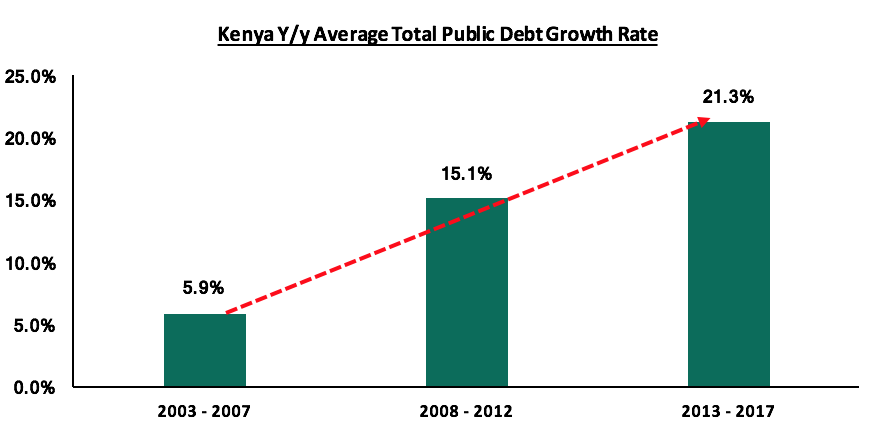
Increasing Domestic Borrowing Starves Kenyans Access to Private Business Loans

Push for a Cashless Society Threatens More Control, Taxation, and Surveillance of the Citizens
Money Lies That Keep You in Poverty