
Victor Koech
February 14, 2024
The ‘Silent Genocide’ in Conngo: Modern-day Slavery, Forced Evictions, and the Ugly Side of the So-Called Green Energy Technologies
A video of a man from the Congo intentionally burning himself on fire went viral on X (previously known as Twitter) on November 8, 2023. An unnamed guy waved a placard reading "Stop the genocide in Congo" in front of Kinshasa, the capital of the Democratic Republic of the Congo. Shortly after that, he doused himself with gasoline, lighted a match, and burned to death.
Tragically, this was an attempt to draw attention to the ongoing genocide and conflict in the Congo, which has been going on for two decades.
Brief history of the conflict
The eastern Congo became a safe haven for millions of Rwandans fleeing the 1994 genocide. Though the majority of Rwanda's refugees were Hutus, the extremists responsible for the genocide made just a tiny fraction of the over 2 million Hutus who fled their homeland. The First Congo War erupted in 1996 when numerous African nations, including Rwanda, which was then governed by the Tutsi, attacked the Congo, claiming that the lingering Hutus constituted a threat.
Joseph Kabila became president after he vanquished despot Mobutu Sese Seko. In 1998, hostilities between the two nations intensified, despite their assistance to the opposition fighting the previous regime. After a while, the government of Rwanda's meddling in the Congo became intolerable, and all Rwandan forces were forced to leave the country. At the border, armed Hutu factions were permitted to organize, in a complete reversal of relationships. The Second Congo War broke out when Rwanda attacked in retaliation.
March 23 Movement, a rebel group funded by Rwanda, arose in the early 2000s. The insurgency in the Congo was started in 2012 when M23 took control of Goma, the capital of North Kivu province. Human Rights Watch claims that M23 was responsible for a plethora of human rights abuses and war crimes, including forced recruitment, rape, and murder. United Nations authorities have stated that the leaders of M23 were "among the worst perpetrators of human rights violations in the DRC, or in the world."
In order to bolster the Congolese army, the United Nations Security Council established the UN Organization Stabilization Mission in the Democratic Republic of the Congo, also known as MONUSCO. In November 2013, the M23 rebels declared the end of their uprising, proving that the mission had been successful.
Return of the conflict
No one is paying attention to the dire situation in the Congo. M23 unleashed lightning strikes on Congolese military installations in multiple communities across North Kivu region in 2021, after nearly a decade of dormancy. M23 controlled a large portion of North Kivu by 2023.
Following criticism for its ineffectiveness in preventing violence, the United Nations peacekeeping operation MONUSCO withdrew from the Congo in June 2023. The country's violent crime rate has skyrocketed since then.
A staggering 6 million individuals have been forced from their homes as of October, as reported by the UN Refugee Agency. With around six million casualties since 1996, this conflict ranks among the worst in human history.
The wealth of natural riches in the Congo has contributed to M23's recent increase in popularity. Electric cars and mobile phones rely on cobalt, which is found in abundance in the Congo. Almost every electrical item uses coltan, as it is one of the world's greatest sources. M23 is one of many rebel groups that smuggles these minerals for profit and fights bloodily for control of the mines and transportation networks.
Modern day slavery in the Congo
Extreme violations of human rights by armed forces have resulted from the extraction of this material. Mining operations for cobalt and copper are expanding, and this expansion is forcing the displacement of civilians from their homes. Children were still inside homes that were burnt by soldiers. A woman was raped by three troops, who then stole her field and destroyed her harvest.
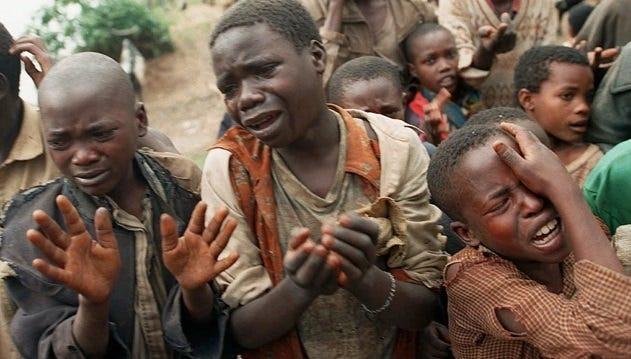
Devastation affects not only homes but also families and lifestyles. When conflict breaks out, children may be kidnapped and enlisted into armed groups, or removed from their homes and sent to displacement camps. Because poverty is so widespread in the country, millions of people are going hungry and desperately need help.
Our reliance on cell phones and other modern devices is causing harm to the Congolese people.Congolese people of all ages mine 20% of the world's cobalt, which accounts for 60% of the supply. The United Nations estimates that 225,000 people, including 40,000 children, are employed by the Congolese government in the cobalt mining industry.
Working in the cobalt mines is like being a slave; the pay is low, and the working conditions are hazardous. Many women and children work there just to make ends meet.Cobalt stones are used in many of our electrical products, and children as young as six years old work in dangerous mines all day to obtain them.
Slavery most certainly gave rise to our modern electronic devices, including our cellphones, tablets, computers, and EVs.
Forced Evictions
Massive human rights violations, such as sexual assault, arson, and beatings, have resulted from the development of industrial-scale cobalt along with copper mines in the DRC, which has compelled the displacement of entire towns.
In a report titled "Powering Change or Business as Usual?," Amnesty International explain how communities have been forcibly removed from their homes and farmland due to the rush by multinational companies to expand their mining operations.
Human rights activist Agnès Callamard demanded an immediate end to the "worst lives wrecked and must stop now" forced evictions caused by firms attempting to develop their cobalt and copper mining ventures.
Rechargeable batteries are an essential part of the energy shift away from fossil fuels, according to Amnesty International. Just transitions are necessary for climate justice. Further human rights atrocities must not result from the global economy's decarbonization.
"The DRC people have endured centuries of oppression and exploitation, both under and after colonialism, and they continue to see their rights violated even as they watch their wealth dwindle away."
Copper and cobalt, two metals necessary for the production of the vast majority of lithium-ion batteries, have seen a rise in demand due to the increasing popularity of so-called clean energy technologies. Many electronic equipment rely on these for power, such as electric cars and mobile phones. As for copper, the DRC boasts the seventh-largest reserves in the world and the biggest cobalt reserves.
While a mobile phone battery only uses around 7 grams of cobalt, the average battery for an electric vehicle uses over 13 kg. Since 2010, the demand for cobalt has tripled, and by 2025, it is projected to reach 222,000 metric tons.
People are being harassed, bullied, or forcibly removed from their houses, or led astray into agreeing to pitiful settlements, according to IBGDH president Donat Kambola. On many occasions, neither a system for resolving complaints nor a path to justice existed.
"We found repeated breaches of legal safeguards prescribed in international human rights law and standards, and national legislation, as well as blatant disregard for the UN Guiding Principles on Business and Human Rights," stated Candy Ofime and Jean-Mobert Senga, researchers and co-authors of the report from Amnesty International.
To generate Powering Change or Business as Usual? Over the course of two visits in 2022, Amnesty International and IBGDH interviewed over 130 individuals at six various mining sites in and around the city of Kolwezi, located in the southern province of Lualaba.
Photographs, videos, satellite pictures, emails, and company comments were all part of the evaluation process. The report covers four sites and details the findings there. Below, we chronicle the atrocities that occurred at three of those sites, which involved forced evictions. Inadequate resettlement was discovered at the fourth site, Kamoa-Kakula, according to the assessment.
What now?
Children are being abused and used to fund paramilitary organizations in the region through cobalt mining, which is comparable to slavery. There have been millions of civilian deaths and countless more displacements in the Congo. Almost no Western news outlets have reported on this. A corrupt regime has turned the once-proud Congo into a war-torn, destitute nation.
Much like the Israel-Hamas war, the West and the rest of the world have failed miserably in identifying these crimes as genocides.
For decades, innocent Congolese civilians have endured misery and brutality in silence. There are people here who are hurt, homeless, and famished. All of us have a responsibility to raise awareness and put pressure on our government to do something. It is our president's responsibility to denounce these crimes. The whole community must intervene in this humanitarian catastrophe and condemn the ongoing human rights atrocities and war crimes.
We must provide a hand to the Congo. In addition to the devastation and loss of life, the country is grappling with severe poverty, food insecurity, sexual violence, limited educational opportunities, inadequate healthcare, and epidemics of cholera, Ebola, and malaria. World Vision, Save the Children, Doctors Without Borders, and the International Rescue Committee are some good places to learn more and make a donation. There are plenty of other wonderful ways to help out Friends of the Congo if you can't donate.
Get the word out in whatever way you can. Get your representatives to consider foreign aid legislation by contacting them by phone or letter and bringing up this problem. You may even use TikTok as a platform to bring attention to the plight of families in the Congo; a portion of the earnings from specific music and filters on the app will go toward supporting these families.
Ibrahim Traore, a Fulfilment of a Revolutionary’s Enduring Prophecy and the Emerging Face of True Pan-Africanism
1984: Is Kenya Descending into Orwell's Dystopian world?
Kissinger Report, the Diabolical Policy Agenda to Depopulate Africa
Increasing Domestic Borrowing Starves Kenyans Access to Private Business Loans

Push for a Cashless Society Threatens More Control, Taxation, and Surveillance of the Citizens
Money Lies That Keep You in Poverty